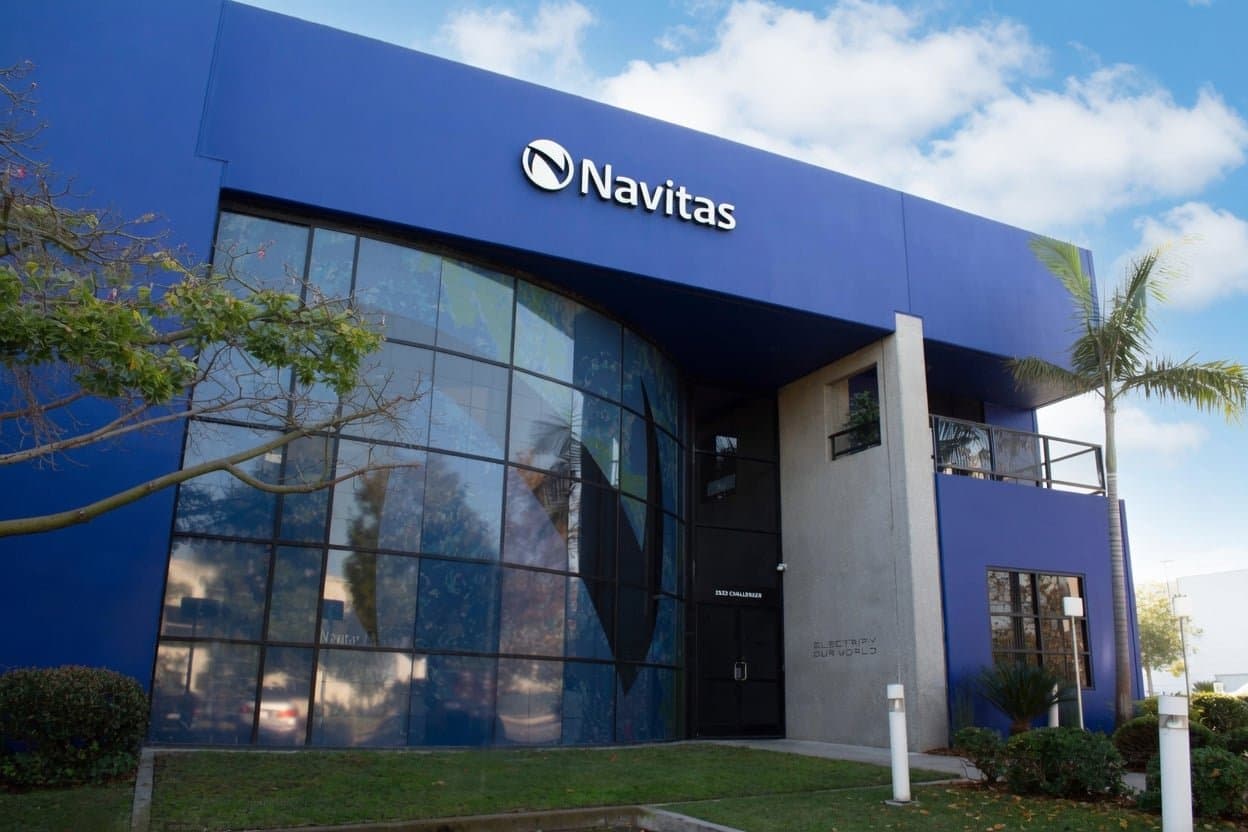
Navitas Semiconductor’s stock jumped after the company unveiled a solid third-quarter revenue outlook, driven by soaring demand for its gallium nitride (GaN) and silicon carbide (SiC) power chips. The semiconductor maker is capitalizing on the surge in AI infrastructure needs, as data centers and high-performance computing systems seek more energy-efficient power solutions.
Quarterly Growth Fueled by AI Momentum
The company expects Q3 revenue to hit around $13.5 million, a 28% rise from Q2’s $10.53 million. This jump reflects accelerating adoption of Navitas’ advanced power management technologies amid the AI boom. Gross margins also improved slightly to 39.5%, while operating losses narrowed, signaling better operational health. Shares climbed 4.5% during regular trading, though some profit-taking in after-hours trading trimmed gains.
Risks Linger Over Customer Concentration
Despite these positive signs, Navitas faces significant risks tied to its heavy reliance on a single distributor, which accounted for 71% of sales in Q2. This dependency raises questions about the sustainability of growth, as most of the recent surge came through this one channel. Investors are watching closely for evidence that the company can diversify its customer base and reduce this vulnerability.
AI Power Solutions Set to Dominate by 2026
Looking ahead, Navitas forecasts AI-related applications will make up more than a third of its revenue by 2026. The shift reflects a broader trend where power efficiency is becoming critical for AI workloads, pushing demand for GaN and SiC chips higher. High-power applications revenue has already climbed over 50% year-over-year, underscoring the expanding role of energy-efficient semiconductors in AI infrastructure.
Similar AI-driven revenue growth has boosted other tech players this quarter, highlighting the sector’s momentum. Navitas’ challenge will be to sustain this growth while managing customer concentration risks and scaling its market reach.
This material is for informational purposes only and does not constitute financial advice.