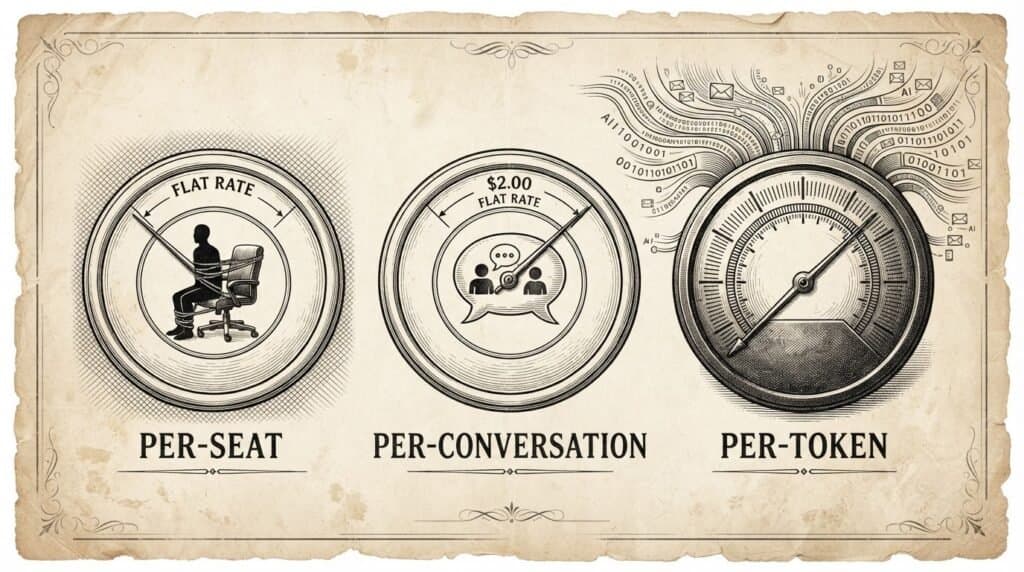
Meta’s switch from free testing to charging $2 per million tokens for its Business Agent service on August 1, 2026, signals a major shift in how companies pay for AI-driven software. Instead of billing per user seat, Meta is tying costs directly to AI usage, a move that could reshape enterprise software economics.
Historically, businesses paid for software based on the number of users. This per-seat model was simple and matched growth in human teams. But as automation takes over more than 40% of tasks in many jobs, according to BCG research, counting seats no longer reflects the true value delivered. Monday.com’s recent pivot from per-seat SaaS subscriptions to AI credit-based pricing illustrates this emerging trend, emphasizing payment for AI work rather than human access.
Meta’s new approach bundles AI processing and message sending into one fee, offering a huge cost advantage over competitors. For example, interactions on Meta’s platform typically consume 20,000 to 25,000 tokens per conversation, meaning a 10-turn exchange costs around 40 to 50 cents. Salesforce’s per-conversation flat fee of $2 for similar interactions is roughly 40 to 50 times higher. For companies managing billions of daily business conversations, this pricing gap can dramatically affect profit margins.
However, the shift brings complexity. Starting October 1, 2026, Meta will charge separately for service messages within a 24-hour window, creating a dual billing system that combines AI token costs with delivery fees. Enterprises will have to balance these overlapping charges while proving their AI investments generate returns. Gartner expects more than 40% of agentic AI projects in enterprises to confront similar challenges.
this content is for informational purposes and not investment advice