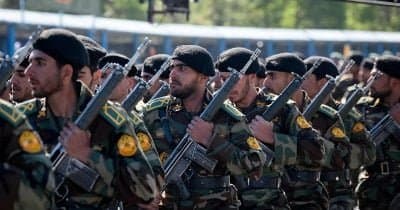
Iran has broadened its military campaign by launching new attacks on US allies across the Middle East, signaling a significant escalation in the ongoing 2026 regional conflict. The assaults, involving missiles and drones, have targeted facilities in Bahrain, Kuwait, Qatar, Saudi Arabia, Oman, and the UAE. This strategy indicates that Tehran is expanding its battlefield beyond direct confrontations with the United States, aiming to pressure a wider coalition of regional partners.
Details of Iran’s Recent Military Actions
Throughout July, Iranian forces intensified strikes on multiple fronts. Missiles and drones struck military and strategic installations affiliated with US-backed governments, disrupting regional stability. The choice of targets reflects Tehran’s capability to coordinate simultaneous attacks and maintain pressure on several states at once. These developments coincide with increased military support from Iran to allied groups, reminiscent of its expanded involvement in Yemen, where Iran has bolstered Houthi forces in the Yemen conflict.
Meanwhile, the broader conflict involves a complex network of actors including Israel and Gulf Arab states, all caught in escalating hostilities. The regional war’s dynamics are shifting as Iran leverages missile technology and proxy militias to widen its influence and challenge US regional dominance.
Market and Diplomatic Responses to Escalation
The military escalation has had immediate effects on diplomatic expectations and market sentiment. Prediction markets now assign roughly a 29% chance of a US-Iran deal by the end of 2026, down from previous estimates. This agreement would likely include reconstruction funding for Iran, but the recent spike in hostilities is dampening optimism about such a diplomatic breakthrough.
Investors and analysts interpret the increased Iranian attacks as an obstacle to negotiations, causing a notable drop in deal probabilities across related prediction markets. Attention is focusing on key figures like US President Donald Trump and Iranian Foreign Minister Javad Zarif, whose moves could influence future talks and market pricing.
Potential responses from the US and allied states remain uncertain but might trigger further market shifts. Observers are also watching for peace initiatives or ceasefire calls that could signal a thaw in relations, affecting the outlook for resolution. The fluidity of the situation ensures that predictions will continue to change as new developments unfold.