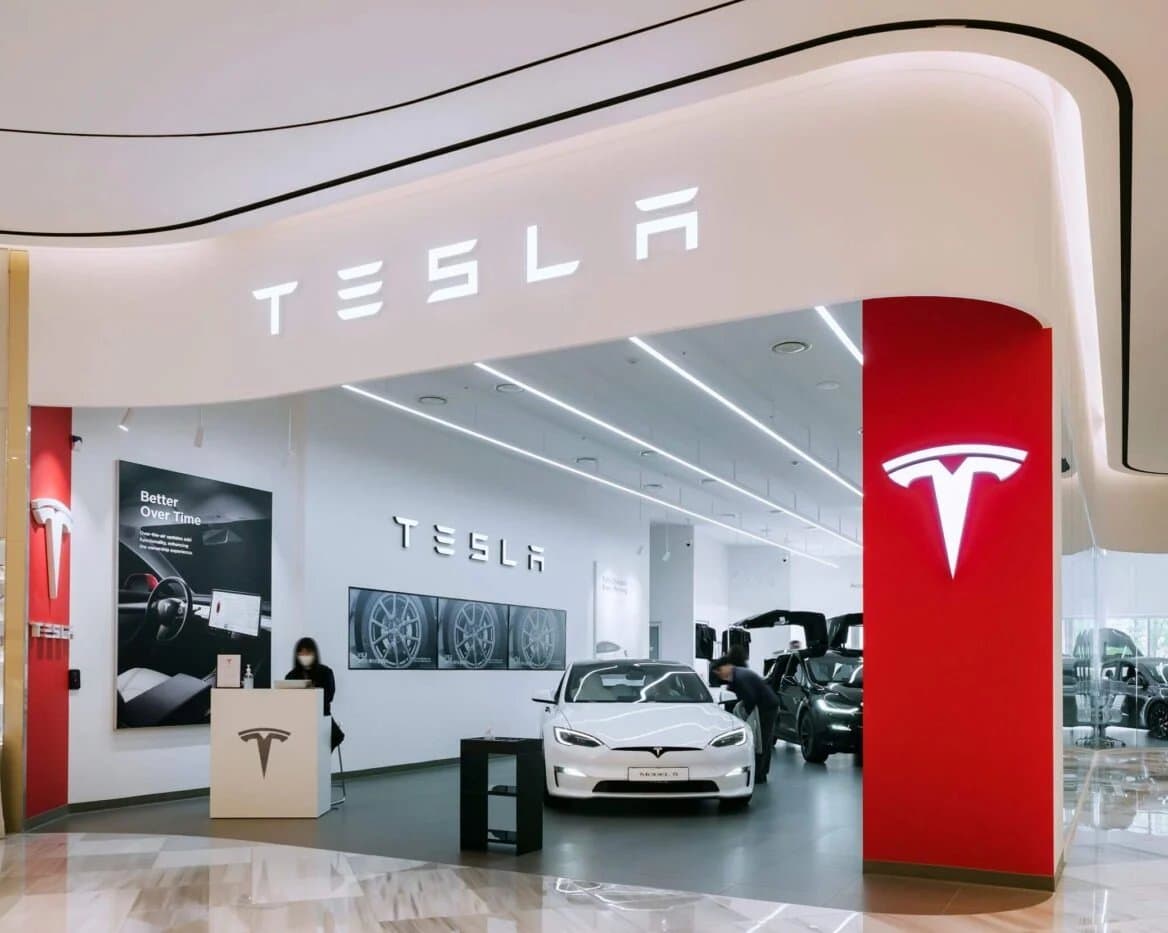
Tesla is set to release its second-quarter earnings on Wednesday, with Wall Street anticipating earnings of $0.54 per share on $27.4 billion in revenue, up from $0.40 EPS and $22.5 billion revenue a year ago. Despite these solid numbers, the focus remains beyond current financials.
Delivery Growth vs. Stock Valuation
The company delivered approximately 480,000 vehicles in Q2, marking a 25% year-over-year increase. This surge is partly driven by higher oil prices, Tesla incentives, and a pullback from traditional automakers after the federal EV tax credit expired. Energy storage also recovered from a weak Q1, with 13.5 gigawatt-hours sold, suggesting improving gross margins according to RBC analyst Tom Narayan, who maintains a Buy rating and recently increased his price target to $500, factoring in a potential Tesla-SpaceX merger.
Yet, Tesla’s share price, trading near $374 and down 18% year to date, appears disconnected from these gains. GuruFocus values the stock at $291.42, implying a 27% overvaluation, and the trailing P/E ratio of 339 far exceeds the five-year median of 107. Insider selling of $12.4 million in recent months adds cautionary signals about near-term prospects.
Focus on Robotaxi and Optimus
Market participants seem to price Tesla primarily on the promise of future innovations, notably the Robotaxi service and the Optimus humanoid robot, rather than on the current quarter’s results. The AI-driven Robotaxi, launched in Austin in June 2025, will be closely watched for expansion plans, while updates on Optimus, with a third iteration expected, are anticipated.
Full Self Driving subscription growth, now at 1.3 million users, will also be a key metric for investors gauging Tesla’s software monetization potential. Morgan Stanley’s Andrew Percoco holds a Hold rating with a $417 target, emphasizing that the earnings update alone may not shift valuation decisively.
Robotaxi revenues are unlikely to impact earnings materially before 2027, and a Tesla-SpaceX merger remains speculative with a 12- to 18-month timeline. Optimus development timelines also lack clarity, leaving investors to weigh near-term results against longer-term transformative bets.
This material is informational and not financial advice.