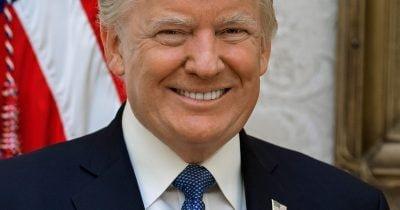
The recent calls by President Trump for US companies to lower their prices seem to be driven by a desire to alleviate consumer pain during a time of rising inflation. However, this push coexists awkwardly with the administration's tariff policies, which are largely considered to be a significant factor in increasing costs for American households.
On June 30, Trump took to Truth Social to press gasoline retailers to lower prices to around $2.50 per gallon, citing current oil prices of $68 a barrel as justification. This public assertion was accompanied by a warning to companies that non-compliance would bring 'big problems.' Such obvious pressure raises questions about how viable it is to demand price drops while market conditions may not support them.
The situation is further complicated by Trump's commendation of Walmart for their announcement of price reductions across several categories, including a notable 15% cut in ground beef prices. This reduction was suggested to celebrate the country's 250th anniversary, framing it as a patriotic gesture. However, the looming tariffs present a stark contradiction: while retailers may cut visible prices to respond to political pressure, their overall cost structure remains high.
The Tariff Effect
Analyses indicating that tariffs implemented during Trump's administration in 2025 have contributed to significant increases in household costs cannot be overlooked. Estimates suggest that American families might be facing hundreds to even thousands of dollars in additional expenses annually, directly tied to these trade policies. The paradox is that while Trump calls for price reductions, his own economic strategies might be undercutting efforts to achieve them.
This is not a new approach for the administration; in 2025, Trump urged pharmaceutical companies to adjust US drug prices to be more in line with international levels. The lack of substantial response to that request highlights the difficulty in regulating prices in a free market, underscoring the likely challenges ahead.
Implications for Investors
The consequences of these pricing pressures extend far beyond political optics; they are poised to have significant implications for stock prices and investor sentiment. Major retailers, particularly giants like Walmart, could see their profit margins squeezed if they are compelled to lower prices while grappling with rising input costs from tariffs. Such dynamics will be evident in quarterly earnings, where margins that aren't maintaining their strength could alert market watchers to deeper issues.
In the energy sector, the situation is equally precarious. Gasoline retailers operate on thin margins, and while $2.50 for gas might seem achievable given the current oil price, sustaining that level requires both stable crude oil prices and well-managed operational costs. If the price of oil does not support these retail prices, we might witness significant volatility in the sector, posing additional risks for investors.
This article is for informational purposes only and does not constitute financial advice.