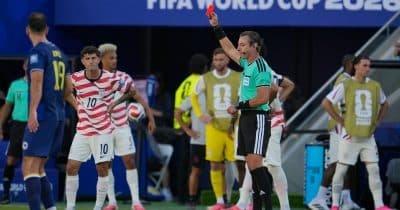
In a shocking turn of events, President Donald Trump personally intervened to reverse a red card suspension for US striker Folarin Balogun, making a notable impact in the sports world just as the vital World Cup knockout stages begin.
This unprecedented action from the President, who contacted FIFA President Gianni Infantino, resulted in the suspension being lifted, allowing Balogun, the US team's leading scorer, to participate in the crucial round-of-16 match against Belgium. This moment marks the first time since 1962 that FIFA has overturned a World Cup red-card suspension, raising questions about governance and integrity in international football.
The Implications of Trump's Intervention
The context behind this decision is incredibly significant. Balogun received a red card during the US team’s 2-0 victory over Bosnia and Herzegovina, an action that typically would lead to an automatic one-match ban, potentially sidelining him for one of the biggest matches in the tournament. His remarkable performance, as the top scorer for his nation with three goals thus far, put added pressure on the situation.
Trump's swift action suggests a merging of political influence into the world of sports, particularly evident in a tournament being held across the US, Canada, and Mexico. The commercial ramifications of Balogun’s involvement in a high-stakes match are immense, and FIFA’s decision to annul the ban reflects a calculation that goes beyond mere sporting fairness.
Backlash and Criticism
The reaction to this decision has not been positive from all quarters. Belgium’s football federation expressed its discontent, indicating the potential for a formal appeal against FIFA’s ruling. This sentiment is echoed in broader criticism that the reversal appears politically motivated and lacks the clarity and transparency typically expected in such serious decisions.
For FIFA, the balancing act here involves maintaining credibility while also catering to commercial interests, particularly with the 2026 World Cup on the horizon. Keeping the host nation's star player on the pitch creates not only a more engaging spectacle for viewers but also prompts greater financial returns linked to viewership and merchandise sales.
The Future of FIFA's Authority
The broader implication of this incident may well affect how FIFA structures decisions moving forward, especially when international politics encroach upon the realm of sports. If the precedent set during this World Cup persists, we could see an influx of political involvement in sporting decisions, undermining the body’s historical commitment to impartiality.