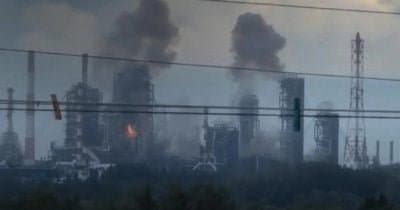
Ukrainian forces executed a drone strike on the Slavneft-YANOS oil refinery in Yaroslavl on the night of July 5-6, igniting fires and explosions at one of Russia's largest fuel processing hubs. Situated 250 kilometers northeast of Moscow, this refinery handles about 15 million metric tons of crude annually, equating to roughly 300,000 barrels per day, making it a critical node in Russia's energy supply chain.
A Sustained Campaign Against Energy Infrastructure
This attack was not isolated. Since May 2026, Ukrainian forces have hit the same facility four times: May 22, at least once earlier that month, June 28, and now in early July. This pattern indicates a deliberate and continuous operational strategy rather than sporadic strikes.
Yaroslavl’s regional governor Mikhail Yevrayev confirmed drone activity leading to temporary road closures, signaling the localized disruption caused by these operations. Ukrainian leadership, including President Volodymyr Zelenskyy and the Security Service of Ukraine, framed these strikes as part of a broader approach to impose "long-range sanctions" targeting Russian energy assets, effectively weaponizing drone warfare to inflict economic pressure.
Implications for Global Energy and Inflation
Each successful strike reduces refining capacity, tightening fuel supplies and pushing fuel prices higher. This inflationary pressure trickles through the economy, limiting central banks’ flexibility to lower interest rates, which remain a key determinant of crypto market dynamics. Persistent elevated energy costs feed into broader inflation measures, potentially stalling monetary easing that investors often anticipate for crypto valuation boosts.
Direct Consequences for Crypto Mining and Investors
Energy costs are a vital factor for proof-of-work mining operations, which consume significant electricity volumes. Although Bitcoin mining has diversified geographically and increasingly relies on renewables, surging global energy prices still squeeze miner margins and influence hash rate fluctuations.
For commodity traders and macro-oriented crypto funds, the frequency and intensity of Ukrainian strikes on Russian refineries like Slavneft-YANOS serve as a leading indicator of potential inflation shocks. Should these attacks intensify or expand to other major refineries, the resulting supply constraints could be reflected in headline inflation figures within the next one to two quarters, significantly impacting crypto market sentiment.
This article was edited by Editorial Team. For more information on how we create and review content, see our Editorial Policy.
Material is informational and not financial advice.