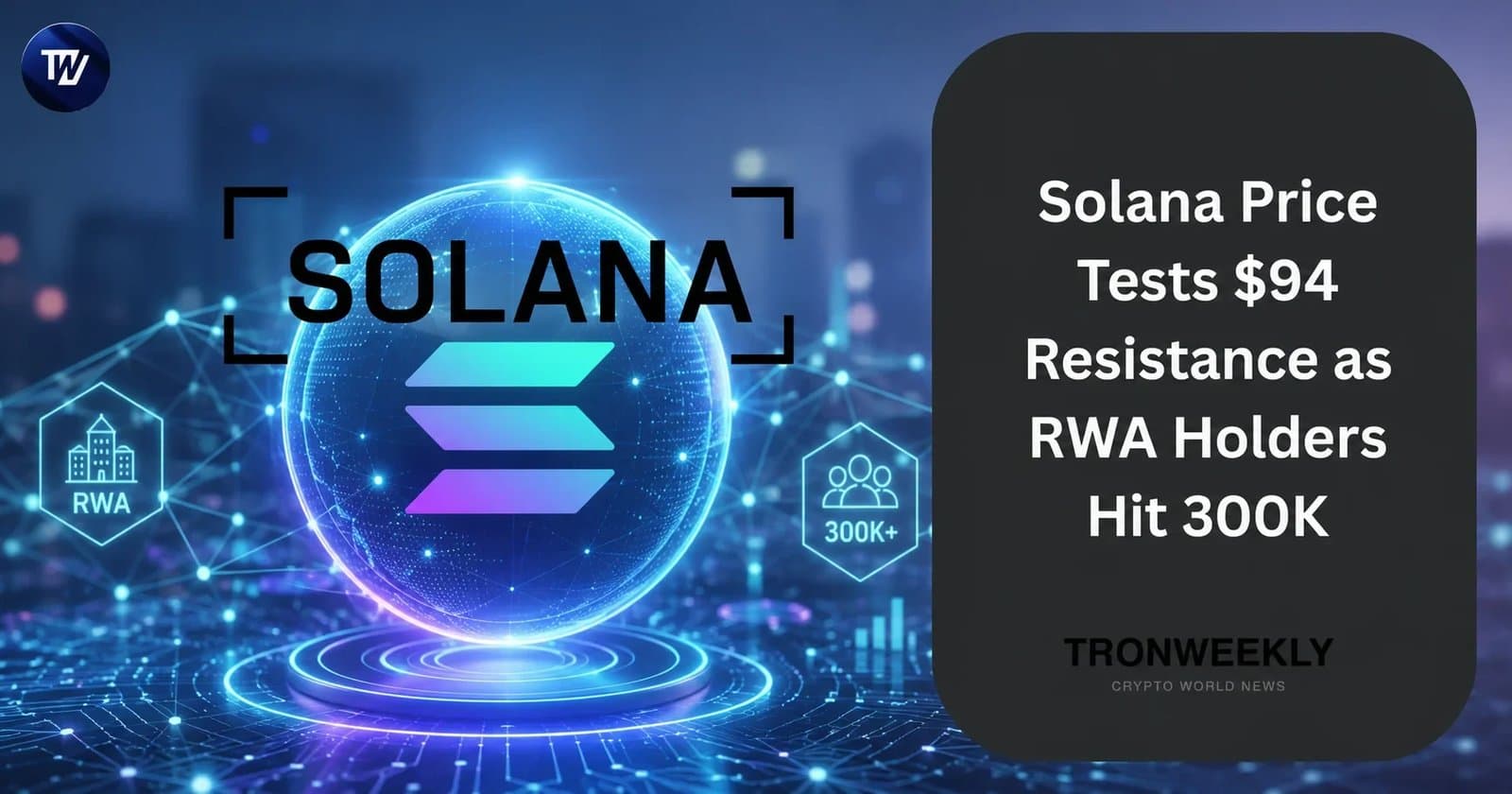
On July 16, 2026, Solana's price faced resistance at $94, as it struggled to maintain momentum following a recent decline. Currently trading at $76.60, the cryptocurrency has seen a 2.08% drop over the past day, alongside a 9.8% decrease in trading volume, which now stands at $1.92 billion. This shift has raised questions about whether the bullish trend observed in June can be sustained or if a deeper pullback is imminent.
Analysts are focusing on a critical resistance zone between $82.26 and $94. As long as Solana's price remains beneath this threshold, there is a potential for a significant dip, with targets set as low as $48. This bearish sentiment is echoed in MCO Global's analysis, which identifies the current price movement as a corrective rally rather than a genuine trend reversal. A break above the $94 mark would be necessary to shift this outlook towards a bullish scenario.
Technically, Solana's performance is showing signs of weakness, as indicated by moving averages. The 20-day and 50-day EMAs hover just below the current trading price, suggesting that buyers are not gaining dominance. The longer-term EMA structures 100-day at $80.84 and 200-day at $94.59 highlight overhead pressure that Solana must break through to reinstate a more favorable recovery perspective.
Adding complexity to the market dynamics is the notable rise in real-world asset (RWA) holders on the Solana network, which has surpassed 300,000 for the first time. The value of these assets is nearing $3.32 billion, reflecting a significant milestone for Solana. Such growth in user base and asset value could shift market sentiment positively, particularly if this trend continues in tandem with price stabilization.
The implications of this duality price resistance against increasing network activity could be key for investors. As Solana navigates through these pressures, the contrast between price performance and network growth could define its trajectory in the coming weeks. Solidifying a stronger bullish case would require not only technical breaks but also sustained engagement from RWA holders, which could buffer against potential downturns.
This material is informational and not financial advice.