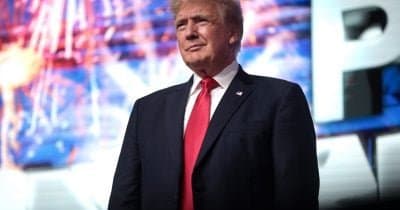
The recent revelation that a teleprompter operator for former President Donald Trump made over $100,000 betting on the words he would deliver provides a fascinating glimpse into the intersection of politics and the betting markets. This situation shows not just individual opportunism but also highlights larger systemic risks within the betting landscape.
Exploring the Mechanics of Speech Betting
Gabriel Perez, who has operated Trump's teleprompter since 2016, utilized the platform Kalshi to place his bets on the content of presidential speeches. In a short timeframe, he made significant profits from predicting over a dozen speeches, including critical events like the State of the Union address. However, the unpredictable nature of Trump’s speeches, where he reportedly deviated from the script around 80% of the time, added a layer of risk to Perez’s strategy.
This scenario raises critical questions about the integrity and fairness of betting markets like Kalshi. As Perez continued to profit from his insider knowledge, regulatory bodies like the Commodity Futures Trading Commission (CFTC) began investigations into the patterns of his trading. Kalshi's enforcement chief, Bobby DeNault, noted that their team had flagged these transactions, indicating potential concerns about insider trading and market manipulation.
Regulatory Responses and Market Integrity
In response to increasing scrutiny, Kalshi recently implemented several measures aimed at enhancing market integrity, including risk scoring and stricter employment checks. This proactive stance may address some regulatory concerns; however, the efficacy of these measures remains to be seen. Following recommendations from the White House, which cautioned staff against betting on inside information, Kalshi is now under a microscope, expected to hold itself accountable to both its traders and regulators.
Interestingly, this isn't an isolated case. The Department of Justice has identified a US Army soldier who successfully turned $33,000 into $410,000 on Polymarket using classified information about Maduro. These stories illustrate a broader trend of strategic betting strategies exploiting privileged information, raising alarms on Capitol Hill about the integrity of not just these platforms but the underlying trust in the market.
Implications for Investors and Market Models
The implications of these developments extend beyond individual traders like Perez. With prominent firms such as Goldman Sachs limiting employee prediction bets, the space is shifting. Investors must navigate a new reality where the potential for insider trading in betting markets can undermine trust and investor confidence. The fundamental question remains: can the integrity measures introduced by platforms like Kalshi effectively mitigate these risks, or will they fall short in the face of clever traders like Perez?
This article is for informational purposes only and does not constitute financial advice.