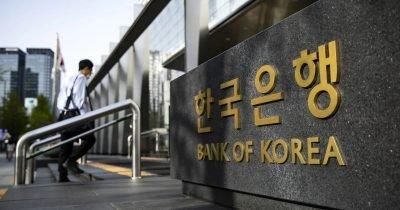
South Korea recently made headlines by locking in a substantial yield of 4.345% on its newly auctioned 50-year Korea Treasury Bonds, attracting considerable attention from market analysts and investors alike. With an issuance of 800 billion KRW (approximately $580 million) scheduled for settlement, this move is indicative of a broader trend in the global financial landscape.
Understanding the Market Impact
The importance of this auction extends beyond mere numbers; it signals potential shifts in capital allocations within various investment classes. The yield of 4.345% represents a significant 1.68 percentage point increase from the previous year. Although this yield is far from being exorbitant historically, it is noteworthy as it approaches the all-time high of 4.39% set just a day before the auction.
- 4.345% yield on newly auctioned 50-year KTBs
- 1.68 percentage point increase in yield over the past year
- 800 billion KRW issuance, approximately $580 million
This uptick in bond yields could incentivize investors within South Korea, a country renowned for its robust crypto trading activity, to re-evaluate their portfolios. For retail traders deciding between the risk-and-return profile of Treasury Bonds versus leveraged cryptocurrencies like Ethereum, the math could drastically favor fixed income.
The Broader Implications for Risk Assets
Notably, South Korea’s auction serves as a benchmark for institutional investors. The availability of a G20 sovereign issuer offering 4.3% risk-free over 50 years essentially sets a floor return for acceptable investment returns across various asset classes, including private credit, venture capital, and crypto. This has paramount implications as all these asset classes compete for limited investment capital.
Moreover, the absence of any reference to the crypto market from South Korean financial authorities amidst this auction indicates that traditional finance may be prioritizing its own stability while seemingly ignoring the volatile nature of digital assets. Meanwhile, issues relating to bond duration risk and market volatility could mean that the attractiveness of longer-term fixed income investments may sway capital away from crypto, leading to shifts in market dynamics.
Looking Ahead: Future Market Developments
Investors should keep a close eye on upcoming bond auctions and interest rate decisions, as these will invariably influence market sentiment. The apparent divergence between fixed income returns and crypto performance could lead to strategic reallocations of capital that may reshape trading behaviors.
Additionally, understanding the long-term implications of rising yields, especially on the Korean front, may provide valuable insights into how capital flows between traditional assets and the crypto universe will evolve in the near future.
This material is for informational purposes only and is not financial advice.