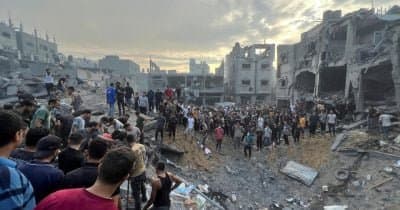
The recent bombing of a Gaza City area by Israeli forces, which resulted in several critically wounded Palestinians, highlights the precarious nature of the ongoing Israel-Gaza conflict. Despite a US-brokered ceasefire that has been in place since October 2025, military actions have persisted, raising alarms over the potential for further escalation in civilian areas. This attack, targeting both tent camps and residential zones, has exacerbated the humanitarian crisis and fueled concerns about the region's stability.
The Gaza Health Ministry's reports of significant casualties since the declaration of the ceasefire illustrate the continuous hostilities. As violence escalates, market activity is beginning to reflect increased expectations for further Israeli military operations, suggesting that investors are bracing for a more volatile geopolitical landscape. The markets seem to be reacting to the possibility that Israeli military actions may extend beyond the current theaters, potentially impacting broader regional dynamics.
Investor sentiment is closely tied to the communications from Israeli officials, including Prime Minister Benjamin Netanyahu and Defense Minister Israel Katz. As statements are monitored, any confirmation of strikes in additional countries could significantly shift market expectations. Conversely, the announcement of peace initiatives or new ceasefire agreements could inject a sense of stabilization, altering the current outlook for investors and stakeholders in the region.
In light of the current situation, it is crucial for investors to remain vigilant. The implications of these military actions not only affect humanitarian considerations but also have the potential to influence global economic trends and market fluctuations. As the situation develops, stakeholders must carefully assess the evolving landscape to make informed decisions regarding their investments.
This material is for informational purposes only and does not constitute financial advice.