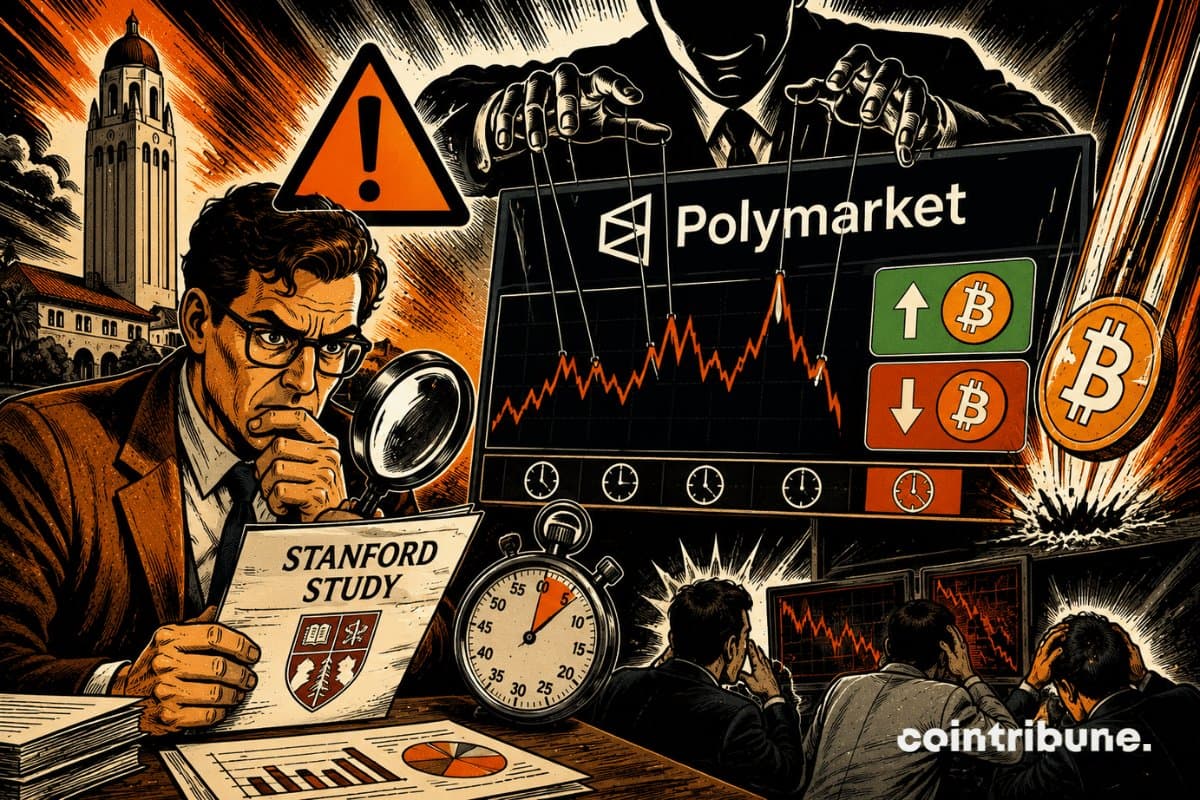
A recent study from Stanford University has sparked significant concerns regarding the integrity of Bitcoin prediction markets on Polymarket. Researchers discovered that sophisticated traders have been effectively manipulating five-minute contracts to influence the spot price of Bitcoin just before settlement. Such manipulation not only undermines the fairness of these markets but also raises alarms about the potential risks to retail investors, who may be unwitting victims of these practices.
The study indicates that these short-term contracts create perverse financial incentives. As traders manipulate order flow on physical exchange platforms, they can shift Bitcoin's spot price by mere fractions of a percent right before contract expiration. This behavior resulted in an estimated $1.28 million wealth transfer from ordinary traders to these manipulators during the period studied. The implication is clear: the current structure of these contracts makes them ripe for exploitation, raising questions about the regulatory landscape surrounding decentralized prediction markets.
Moreover, the reliance on Chainlink’s second-accurate price streams for contract settlements introduces another significant flaw. The research highlights a statistical anomaly, where a spike in order flow occurs immediately before contract closures, followed by a rapid price reversal. This pattern suggests that the mechanisms designed to ensure fair trading are being gamed by those with advanced knowledge and capabilities. While extending contract durations to 15 minutes or employing time-weighted average price (TWAP) methods could mitigate these risks, the question remains as to whether existing regulatory frameworks will adapt to address these vulnerabilities.
The emergence of such findings not only impacts Polymarket but raises broader questions about the integrity of decentralized finance (DeFi) platforms as they gain popularity among investors. This scrutiny could lead to increased regulatory oversight, a scenario that many in the crypto community dread. As the space continues to evolve, strategies aimed at ensuring fair play and protecting retail investors must be prioritized to maintain trust in these burgeoning markets.
This article is for informational purposes only and should not be considered financial advice.