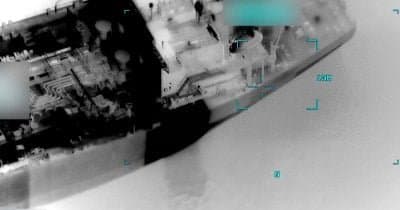
One market participant noted, «This conflict is not just about geopolitics; it’s about how energy supply disruptions ripple through every asset class, including crypto.» The US Central Command has sustained nine consecutive nights of precision strikes targeting over 300 Iranian military sites, aiming to neutralize Tehran's capacity to threaten global oil shipping through the Strait of Hormuz. This narrow passage channels nearly 20% of the world’s oil, making it a critical chokepoint whose instability sends shockwaves far beyond the region.
The US campaign, initiated on July 11, 2026, focuses on military infrastructure such as air-defense systems, radar, missile launchers, and drone facilities. the Pentagon’s deployment of one-way attack sea drones marks a tactical innovation, increasing operational reach in maritime conflict zones. Iran’s March 2026 declaration of the Strait as closed escalated tensions, effectively transforming one of the busiest energy corridors into a flashpoint. This hostile environment has direct consequences for energy security and consequently for markets sensitive to inflation and monetary policy shifts.
While no direct blockchain or crypto technologies are involved, the crisis influences macroeconomic factors key to digital asset valuation. Rising oil prices driven by supply fears exacerbate inflationary pressures, prompting central banks to adjust monetary stances. These adjustments impact investors' risk tolerance, subsequently affecting crypto prices. Traders are therefore advised to watch oil futures alongside traditional crypto indicators, as market sentiment might still be underestimating the potential for conflict escalation and its cascading economic effects.
Given the subtlety of public exposure to these events, the crypto sector faces latent systemic risks linked to energy market volatility. This episode echoes broader trends where geopolitical events indirectly shape crypto markets through macro channels, emphasizing the importance of cross-asset analysis. Investors navigating this terrain should consider the intertwined nature of energy security and digital asset risk profiles during heightened geopolitical uncertainty.
Material is informational and not financial advice