The United States is reportedly weighing options for a potential air assault on Cuba, focusing on the 101st Airborne Division. This development signifies an escalation in geopolitical risks, which have become increasingly relevant for investors navigating the complex landscape of asset prices, including cryptocurrencies.
Current Military Developments
Intelligence sources indicate that Cuba has acquired over 300 military drones from Russia and Iran, heightening concerns regarding U.S. interests in the Caribbean most notably the Guantanamo Bay naval station. In response to these developments, the U.S. has intensified intelligence-gathering operations off Cuba’s coast using surveillance aircraft like the P-8A Poseidon and MQ-4C Triton. These assets are typically employed when constructing a detailed operational picture, suggesting that U.S. military planners are taking the threat seriously.
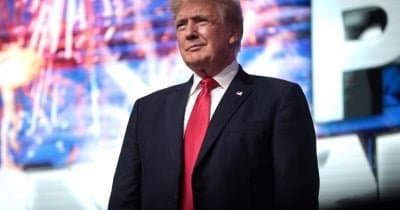
This potential military response follows earlier operations in Venezuela, reflecting a broader strategy by the Trump administration in the region. While no definitive actions have been confirmed, the ongoing discussions add a layer of uncertainty that investors need to monitor closely.
Implications for Crypto Investors
For those involved in the crypto markets, the key question is whether these military discussions will transition from planning to active engagement. Historical trends indicate that Bitcoin often behaves as a safe haven, akin to gold, during periods of military escalation. If this pattern holds, an increase in geopolitical tensions could lead to bullish behavior for Bitcoin, encouraging traders to view it as a digital store of value.
Additionally, market participants should keep an eye on stablecoin dynamics. In previous geopolitical crises, capital has shifted from riskier crypto assets to stablecoins like USDT and USDC, as investors seek to shield their portfolios without exiting the crypto space entirely. A noticeable increase in the market cap of stablecoins, without a corresponding rise in Bitcoin or Ethereum, could be a strong signal that investors are preparing for volatility.
Lastly, the potential military escalation may have ramifications for the U.S. dollar. A conflict in the Western Hemisphere could reinforce the dollar's position as a safe haven, which historically has created downward pressure on Bitcoin prices. Conversely, if the situation is perceived as fiscally irresponsible, a weaker dollar could positively impact Bitcoin.
This article is for informational purposes only and should not be considered financial advice.