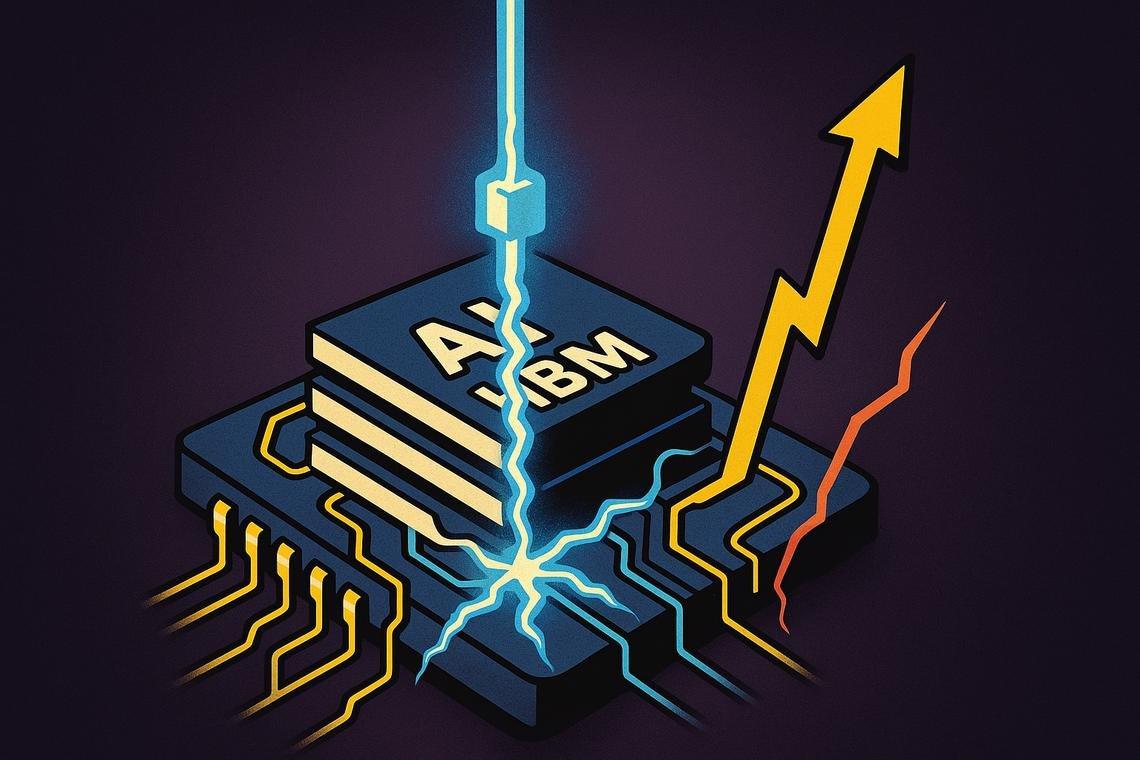
The semiconductor industry is a dynamic landscape, especially with the increasing demand driven by AI technologies. In this environment, companies like Micron and SK Hynix are not just participants; they are emerging leaders, harnessing the robust growth in AI memory chip investments and showcasing impressive profit margins.
Micron's Impressive Financial Performance
Micron Technology achieved a remarkable $23.86 billion in revenue during Q2 2026, alongside a staggering gross margin of 74.4%. This level of profitability is indicative of significant pricing power and a shifting market landscape where AI infrastructure spending plays a pivotal role. Furthermore, the company's net income reached $13.79 billion, complemented by operational cash flow of $11.9 billion. Such figures do not merely suggest incremental growth; they signal a transformative impact on the memory chip sector brought about by the AI boom.
Diverse Revenue Streams and Strategic Positioning
Analyzing the revenue generation components is crucial to understanding Micron's success. Their Cloud Memory Business Unit contributed $7.75 billion, while the Core Data Center Business Unit added $5.69 billion to the total revenue, illustrating how integral cloud and AI workloads are to their strategy. Every product line, including DRAM, NAND flash, and high-bandwidth memory, set new revenue records simultaneously a rare achievement in any competitive industry, notably given the semiconductor sector's notorious cycle of volatility.
The Competitive Edge Through Diversification
Micron's broad portfolio encompassing DRAM, NAND, and HBM provides it with a crucial structural advantage. This diversity insulates Micron from varying demand cycles within the memory market; when a segment like HBM experiences a downturn, other categories like DRAM and NAND can offset financial impacts. This balanced approach contrasts significantly with companies that focus primarily on AI hardware, making Micron’s investment case more resilient against market fluctuations.
In light of these developments, Micron's trajectory within the AI memory chip market illuminates the significant ongoing transformation in the semiconductor industry driven by AI technology. As these dynamics evolve, investors will need to consider both the opportunities and risks associated with concentrated investments in such a rapidly changing market.