The recent assassination of Iranian Supreme Leader Ali Khamenei has sparked fierce protests across Iran, with crowds openly calling for retribution against US President Donald Trump. This escalation of rhetoric and the resulting geopolitical uncertainty hold significant implications not only for Middle Eastern politics but also for global markets and particularly the crypto sector.
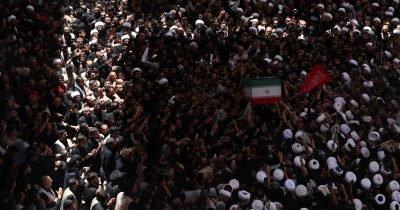
In the aftermath of Khamenei's assassination on February 28, 2026, a massive outpouring of grief and anger during his funeral on July 9 was accompanied by calls for Trump's death, highlighting the deep animosity that persists between Tehran and Washington. The chants of “We will kill Trump” underscored the volatile atmosphere; Trump, in turn, responded with threats of severe retaliation against Iran if such sentiments translated into action. This exchange represents a recalibration of tensions that could easily spiral into further conflict in an already fragile region.
Significantly, these developments have disrupted ongoing US-Iran peace negotiations, which were aimed at addressing critical issues such as military de-escalation and the reopening of the strategically crucial Strait of Hormuz, through which approximately a fifth of the world’s oil traffic passes. With the fragile ceasefire now at an even greater risk following Trump's aggressive warning of “powerful responses,” the potential for renewed military actions looms large, raising fears of price volatility in oil markets.
Geopolitical instability invariably affects investor sentiment across all asset classes, and cryptocurrencies are no exception. The global crypto market, already susceptible to external shocks, could experience heightened volatility as investors react to fluctuating oil prices and the risks associated with escalating conflict between the US and Iran. The disruption of peace talks not only threatens immediate stability but may also complicate broader energy security and sanctions discussions, edging markets closer to uncertainty.
As Iran navigates a leadership transition in the wake of Khamenei's death, the decision-making landscape remains murky, which introduces additional unpredictability into the already complex geopolitics of the region. The ramifications of these tensions extend beyond immediate military considerations, affecting key issues of energy security and the future relationship between the US and Iran in a post-Khamenei Middle East.
This material is informational and should not be considered financial advice.