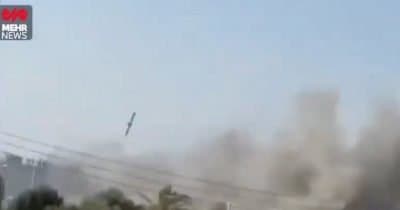
The Islamic Revolutionary Guard Corps (IRGC) escalated tensions in the Persian Gulf by launching coordinated missile and drone attacks on US military installations in Bahrain and Kuwait. According to IRGC statements, these strikes targeted over 18 military sites, including critical logistics hubs like Sheikh Isa Air Base and Ali Al Salem Air Base. Labeled as the 18th and 19th waves of “Operation Nasr 2,” the campaign reflects a deepening cycle of retaliation following earlier US actions against Iranian interests.
Military Escalation and Strategic Targets
The strikes focused on air defense systems and logistical infrastructure necessary for US operations in the region, signaling a calculated attempt to disrupt military readiness without broad escalation. Both Kuwait and Bahrain activated air defenses in response, underscoring the seriousness of the threat. The IRGC’s announcement that further attacks are planned suggests this is not a one-off incident but part of a sustained pressure strategy. Emerging reports about potential IRGC involvement in operations linked to Jordan widen the geographical scope, raising concerns about a broader regional conflict.
Immediate Impact on Crypto Markets
Bitcoin’s volatile reaction near the psychologically critical $100,000 mark captured the market’s conflicted sentiment amid geopolitical instability. Initially, BTC fell to approximately $99,500 as risk-off sentiment pushed traders to liquidate positions. This was quickly countered by a rebound above $102,000 as some investors sought to capitalize on the dip and others viewed Bitcoin as a temporary safe haven. This pattern of sharp swings around major geopolitical events reflects Bitcoin’s dual role as both a speculative asset and a potential hedge.
Meanwhile, altcoins suffered more pronounced losses. Investors typically flock to Bitcoin and stablecoins during heightened uncertainty, causing smaller tokens to experience accelerated sell-offs. This dynamic parallels traditional risk-off movements seen in broader equity markets, which also declined on the news. The volatility is unrelated to any direct crypto exposure to the conflict, highlighting the sensitivity of digital assets to macroeconomic and geopolitical risk factors.
Wider Consequences for Energy and Global Markets
The Persian Gulf remains a critical energy chokepoint, channeling about 20% of global oil supply through the Strait of Hormuz. Any sustained military escalation risks disrupting oil flows, historically pushing energy prices higher and dampening risk appetite across global financial markets. This raises the specter of broader economic ripple effects beyond the immediate military and crypto spheres.
Market moves following the strikes underscored persistent uncertainty, with Bitcoin swinging sharply between $99,500 and $102,000 as investors reassessed risk and opportunity.