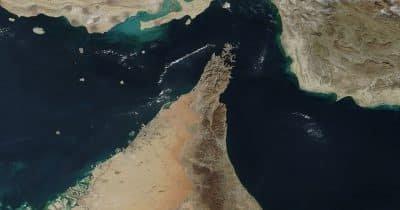
The recent missile attack by Iran's Islamic Revolutionary Guard Corps (IRGC) on the commercial vessel M/V Ever Lovely near the Strait of Hormuz has intensified geopolitical tensions in a region crucial for global oil trade. This escalation raises critical questions regarding the implications for both oil markets and the burgeoning cryptocurrency landscape, particularly how these realms intersect during crises.
Understanding the Significance of This Escalation
The Strait of Hormuz is a vital artery for the world's oil transportation, as it accounts for 20-25% of global seaborne oil traffic. Consequently, disruptions in this area can ripple through energy markets and beyond. Iran's aggressive maneuvers, including boarding vessels and threatening unauthorized transit, have been progressively increasing since February 2026.
- IRGC's attack on the M/V Ever Lovely occurred approximately 7.5 nautical miles southeast of Oman.
- The U.S. military's response has included strikes on Iranian missile and drone sites.
- Shipping routes are being re-evaluated due to rising risks, resulting in swelling insurance costs.
This context lays the groundwork for understanding potential shifts not only in oil prices but also in the cryptocurrency domain.
The Intersection of Geopolitics and Cryptocurrency
Interestingly, reports are surfacing that Iran is considering charging oil tankers a toll of around $1 per barrel for passage through the Strait, with payment options extending to Bitcoin, stablecoins, or yuan. While it remains unclear how successfully Iran can implement this toll regime, its significance cannot be understated. Should Iran effectively establish a payment mechanism using cryptocurrency, it would mark a substantial real-world adoption of digital currencies by a state actor.
This prospective development could invite increased scrutiny from global regulators aimed at curbing financial avenues for sanctions evasion. A toll system leveraging cryptocurrencies would likely prompt:
- Tighter compliance requirements for stablecoin issuers.
- Potential blacklisting of wallet addresses linked to Iranian toll transactions.
- Amplified calls for Know Your Customer (KYC) protocols on peer-to-peer exchanges.
Anticipating Future Trends and Market Reactions
The fallout from the Strait of Hormuz crisis is already influencing the Bitcoin market, with reports of Iranian crypto transactions possibly triggering volatility. Any credible signs of Iran's use of Bitcoin for shipping payments could instigate short-term trading frenzies, as investors might react to perceived threats or opportunities in the market.
Furthermore, should U.S. authorities, particularly the Treasury's Office of Foreign Assets Control, start actively identifying and sanctioning addresses connected to these toll payments, it may create additional compliance burdens for crypto exchanges and decentralized finance (DeFi) protocols.
Disclaimer: This material is for informational purposes only and is not financial advice.