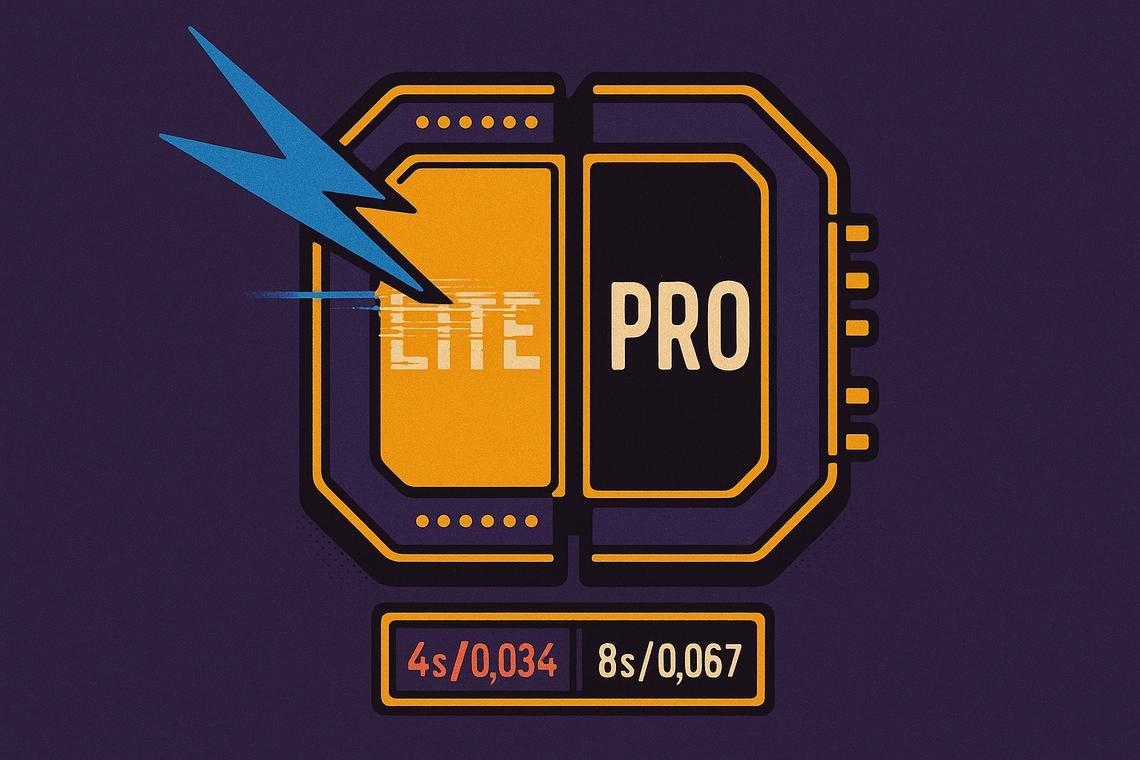
In the rapidly evolving field of AI-driven image generation, Google's latest introduction, the Nano Banana 2 Lite, represents a noteworthy paradigm shift. By promising to deliver images at an impressive pace of about four seconds per image at a cost of $0.034, this model is touted as a significant step forward in cost efficiency, cutting expenses nearly in half compared to its predecessor, the Nano Banana 2, which operates at $0.067 per image. However, the implications of this launch extend beyond mere numbers, as the trade-offs between speed, quality, and application suitability warrant deeper examination.
Cost Efficiency and Performance Insights
The Nano Banana 2 Lite is positioned as the entry-level option in a new three-tier image generation line-up from Google, which includes the Nano Banana 2 and the high-end Nano Banana Pro. The Lite model's enhanced speed and reduced cost cater to high-volume users who prioritize efficiency over absolute image fidelity. For teams engaged in extensive image generation tasks, this model promises significant savings, translating to wide-ranging impacts for businesses relying on AI-generated content.
Yet, the cost-cutting comes with certain compromises. Although the Lite model matches or surpasses the original in many tasks, it falls short in critical areas like photographic realism and fine details. For example, professionals who require high-quality images with intricate details may find the Nano Banana 2 still holds an edge. This nuanced performance profile suggests that users will need to carefully assess their specific needs when choosing between these models.
Strategic Positioning within Google’s Ecosystem
The integration of Nano Banana 2 Lite across Google's ecosystem encompassing Google AI Studio, Gemini API, and even Google Photos adds a layer of convenience that competitors may struggle to replicate. While alternatives like Reve 2.0 offer lower prices at approximately $0.0067 per image, they lack the deep integration and scalability provided by Google’s infrastructure. This positions Nano Banana 2 Lite not only as a cost-effective option but also as one that benefits from the extensive reach and robust capabilities of Google’s overall AI framework.
As Google defines the market with this three-tiered structure, it clarifies its offerings for various user segments: from those requiring rapid output to professionals demanding uncompromised quality. This strategic approach may influence how businesses allocate resources for AI image generation, potentially reshaping workflows and operational decisions.
This article is for informational purposes only and does not constitute financial advice.