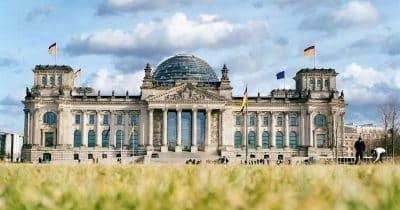
Germany’s decision to reduce its GDP growth forecast from 1% to a mere 0.5% for 2026 signals a critical response to the ongoing geopolitical turmoil stemming from the Iran war. This situation is not just a domestic concern but indicative of the broader instability affecting European markets and energy prices.
The Impact of Energy Supply Disruptions
The closure of the Strait of Hormuz, a vital channel for liquefied natural gas, marked a pivotal moment for energy prices, driving the TTF gas prices in Europe towards €60 per megawatt-hour. This spike is detrimental, with the ifo Institute estimating that prolonged energy shocks could reduce German growth by as much as 0.8 percentage points. Such a downturn poses the risk of shifting the economy from a fragile recovery into outright contraction.
Shifting Forecasts and Business Sentiment
Furthermore, Germany’s DIHK chamber of commerce has taken an even bleaker stance, projecting growth at a mere 0.3%. This revised outlook aligns with diminishing business confidence, which is now at its lowest since the pandemic. The confluence of a declining growth forecast and reduced business sentiment suggests that investors should brace for a potential recalibration of their strategies in the German market.
Government Response: A Bold Fiscal Strategy
In response to these challenges, the German government unveiled a significant €500 billion infrastructure investment initiative aimed at stimulating economic activity. Coupled with a commitment to increase defense spending beyond 1% of GDP, these measures indicate a robust fiscal approach designed to counteract the detrimental effects of the energy crisis. The IFA's Spring forecast underscores the necessity of such measures, recognizing that while fiscal expansion may provide a buffer, the underlying energy challenges remain.
What This Means for Investors
For investors, the implications are manifold. Energy-intensive sectors such as chemicals and automotive are particularly vulnerable to margin pressures resulting from high gas prices. Companies adept at transferring these costs downstream are likely to fare better than those unable to do so. This differentiation in resilience among sectors could lead to shifts in investment preferences as stakeholders look for stability amid turbulent times.