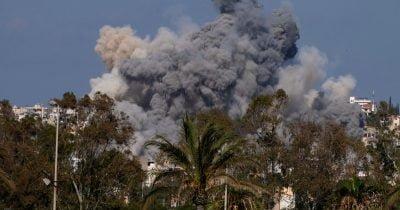
The recent escalation of tensions between Iran and Jordan has triggered air raid sirens in Jordan as missiles were detected in its airspace, according to the country's state news agency. This development not only heightens regional security concerns but also introduces significant volatility into the crypto markets, where Bitcoin's perceived role as a hedge against crises comes back into focus.
Understanding the Implications of Geopolitical Risks for Investors
The situation is exacerbated by a series of military confrontations that illustrate both the frequency and gravity of provocations in the region. For instance, on February 28, Jordanian forces intercepted 49 aerial attacks, including ballistic missiles, indicating a robust defense system bolstered by US support. The recent targeting of the Al-Azraq facility, a US military base, elevates this conflict beyond mere bilateral disputes; it now poses potential ramifications for global security.
One of the critical aspects of this escalation is Iran's evolving relationship with cryptocurrency. Reports suggest that Iran's crypto sector processed over $7.78 billion in activity during 2025, representing a strategic tool for circumventing international sanctions. This reliance adds another layer of complexity for crypto exchanges and investors in the region, especially as authorities intensify scrutiny of crypto assets linked to Iranian wallets.
- Over $7.78 billion in Iranian crypto activity reported in 2025.
- 49 aerial threats intercepted in February 2026.
- Missiles targeted the Al-Azraq US military installation.
Market Behavior in Response to Military Conflicts
For crypto investors and traders, it is essential to monitor trading volume fluctuations in Bitcoin and major stablecoins like USDT and USDC during and shortly after military incidents. Historical trends indicate that such volumes typically peak within the first 24 to 48 hours following a geopolitical shock, before gradually stabilizing as the markets recalibrate their expectations.
Moreover, the growing instability in regions like the Middle East leads to an increased demand for dollar-denominated digital assets. This phenomenon can create temporary price discrepancies that savvy traders exploit but also signify genuine capital flight from unstable economies.
Future Considerations and Market Watchpoints
The evolving geopolitical landscape necessitates vigilance from crypto investors and market watchers. Should tensions escalate further, there could be renewed enforcement of sanctions targeting crypto transactions, which may prompt major exchanges to tighten compliance measures. This tightening could reduce market liquidity and potentially result in the delisting of tokens associated with sanctioned jurisdictions.
Disclaimer: This material is for informational purposes only and does not constitute financial advice.