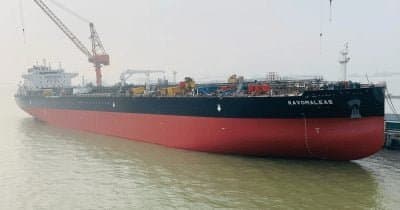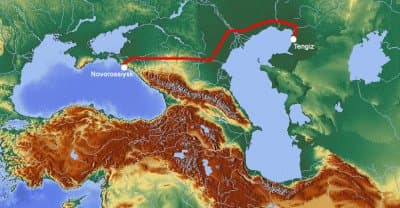
On July 19, 2026, the Caspian Pipeline Consortium (CPC) halted oil loadings at its Novorossiysk terminal after Ukrainian drone attacks targeted two tankers, ASIA and NISSOS IOS, one of which caught fire. This event disrupts a key export route responsible for moving approximately 80% of Kazakhstan’s crude via a 1,510-kilometer pipeline from Tengiz oil fields to the Black Sea.
Worsening Impact on Supply and Geopolitics
The CPC pipeline typically carries about 63 million tons of Kazakh crude annually, equating to roughly 1% of global oil supply a non-negligible volume in today’s interconnected markets. The recent offensive adds to a string of attacks dating back to November 2025, underscoring a sustained campaign rather than isolated incidents. The estimated losses for Kazakhstan reached $1.5 billion in January 2026 alone, coinciding with a 6% decline in production due to upstream disruptions.
The consortium’s ownership includes Russian, Kazakh, and American stakeholders, with Chevron involved among the U.S. participants, complicating the geopolitical dynamics as the pipeline runs through contested zones. Russian court-imposed technical halts in 2022 foreshadowed current operational fragilities amid geopolitical strains in the Black Sea region.
Broader Market and Strategic Consequences
Kazakhstan’s heavy reliance on this single export artery raises broader concerns about energy security and alternative routing capabilities. The long-discussed Middle Corridor, spanning the Caspian Sea, Azerbaijan, Georgia, and Turkey, emerges as a potential backup but requires extensive infrastructure upgrades and results in longer transit durations.
Beyond oil markets, Kazakhstan’s fiscal stability could face pressure if export revenues shrink further. This might affect domestic energy policies and electricity pricing, critical variables for the country’s significant Bitcoin mining sector, which benefits from low electricity costs linked to fossil fuel power generation.
This disruption highlights vulnerabilities at the intersection of energy infrastructure and geopolitical conflict zones, with ripple effects extending to investment strategies and energy-dependent industries.