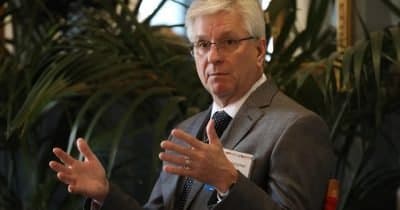
Market sentiments shifted dramatically following Federal Reserve Governor Christopher Waller's recent remarks in Frankfurt, where he indicated a potential interest rate hike in response to inflationary pressures exacerbated by geopolitical tensions, particularly those involving Iran. This pivot is crucial, as it diverges from the previously anticipated trajectory of rate cuts.
Waller's statements have increased the odds of a 25-basis-point hike by October 2026 to significant levels. Currently, market predictions suggest there is a 61% chance of a rate increase by September 2026, a stark contrast to earlier expectations of stagnant rates. The dynamic range of possibilities has triggered a reevaluation among investors looking at the Federal Open Market Committee's (FOMC) policy, which has altered its language to eliminate any easing bias.
Meanwhile, the probability of maintaining current interest rates after the July 2026 meeting has plummeted to just 64%. This reflects mounting investor anxiety regarding potential inflation, fueled by the complexities of international relations and economic vulnerabilities. Previous indications suggested a more cautious approach, but Waller’s comments have transformed the market’s outlook.
The Federal Reserve’s decision-making process will remain under scrutiny in the coming months as investors and analysts await further inflation data and unemployment reports. Could these economic indicators provide the necessary momentum for the Fed to make a decisive move? Additionally, statements from key figures within the Federal Reserve, including Chair Jerome Powell, will be instrumental in shaping future expectations.
Furthermore, observers will need to keep an eye on geopolitical developments that might impact U.S. economic perspectives and Federal Reserve policy considerations. As tensions in Iran continue to escalate, the implications for foreign policy could create volatility in global markets.
This material is informational and not financial advice.