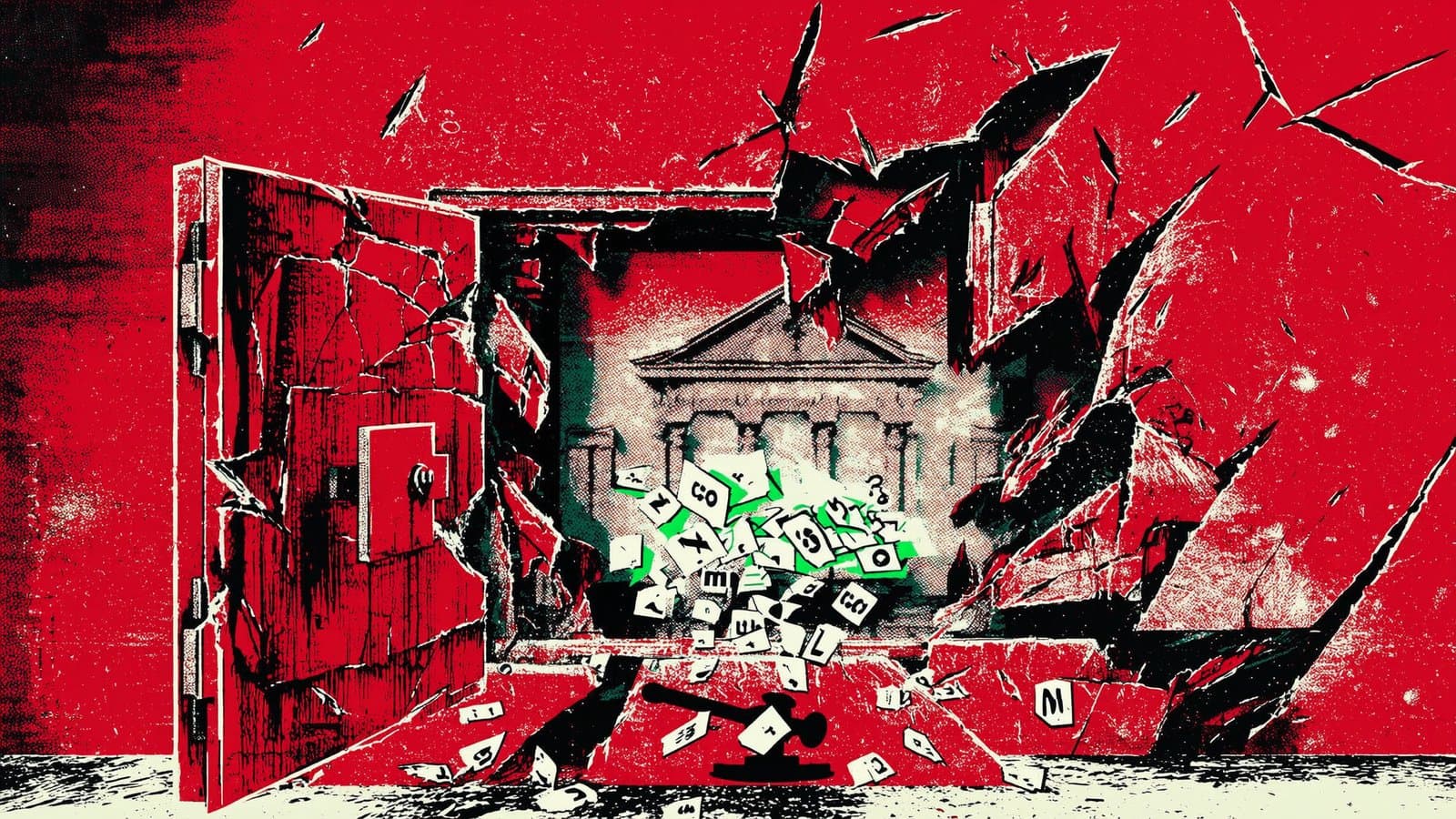
ai16z crashed from a $2.5 billion peak to roughly $305,000 in market value. The token now trades at $0.000277, down 99.99% from its January 1 high. Shaw Walters, founder of Eliza Labs, declared it outright: "dead. Completely."
The death came fast. After Burwick Law filed a class action lawsuit in April 2026 on behalf of token buyers, Walters decided to settle rather than fight. The firm alleged deceptive marketing and false advertising under New York law, naming Walters himself, Eliza Labs, the AI16Z DAO, and launch platform DAOs.fun as defendants. Instead of mounting a legal defense, Walters handed over everything. "Their claim was ridiculous, but we didn't have the capital to legally fight it so we settled on giving them the rest of what we had," he wrote on X Tuesday evening.
The Final Reckoning
What remained after the settlement? Nothing to support the price. No buyback money. No foundation backing. No token supply coming to rescue holders. Walters was blunt about the math: there is simply no capital left. For anyone still holding ai16z, his message was terse: sell it or organize some scheme to pump it up. Both options amount to the same thing, he implied. The foundation is winding down entirely.
Walters himself owns zero of the token. He is moving forward with ElizaOS, the underlying software layer that Eliza Labs built. Since he controls the intellectual property, he plans to start fresh. "I am never letting a token come close to Eliza again," he wrote, a stark admission after watching his creation evaporate.
The Pivot and the Parallel Asset
Some ai16z holders migrated into ELIZAOS, a separate token that trades at $0.000354 with a market cap near $2.65 million. That token fell 6.5% on Wednesday, suggesting contagion from the main collapse. But it operates independently now, backed by different mechanics and treasury reserves.
The lawsuit itself paints a picture of alleged misconduct spanning months. Burwick Law filed the complaint April 16, 2026 in U.S. District Court for the Southern District of New York. It covers purchases from October 24, 2024 onward. The claims include negligent misrepresentation and unjust enrichment, with the firm seeking damages, asset disgorgement, and a constructive trust over traceable treasury wallets.
What began as one of Solana's loudest trades in early January turned into a cautionary tale about token mechanics, founder incentives, and the limits of settling litigation when there is nothing left to defend.
This article is informational only and should not be treated as financial advice. Token investments carry substantial risk, including total loss of capital.