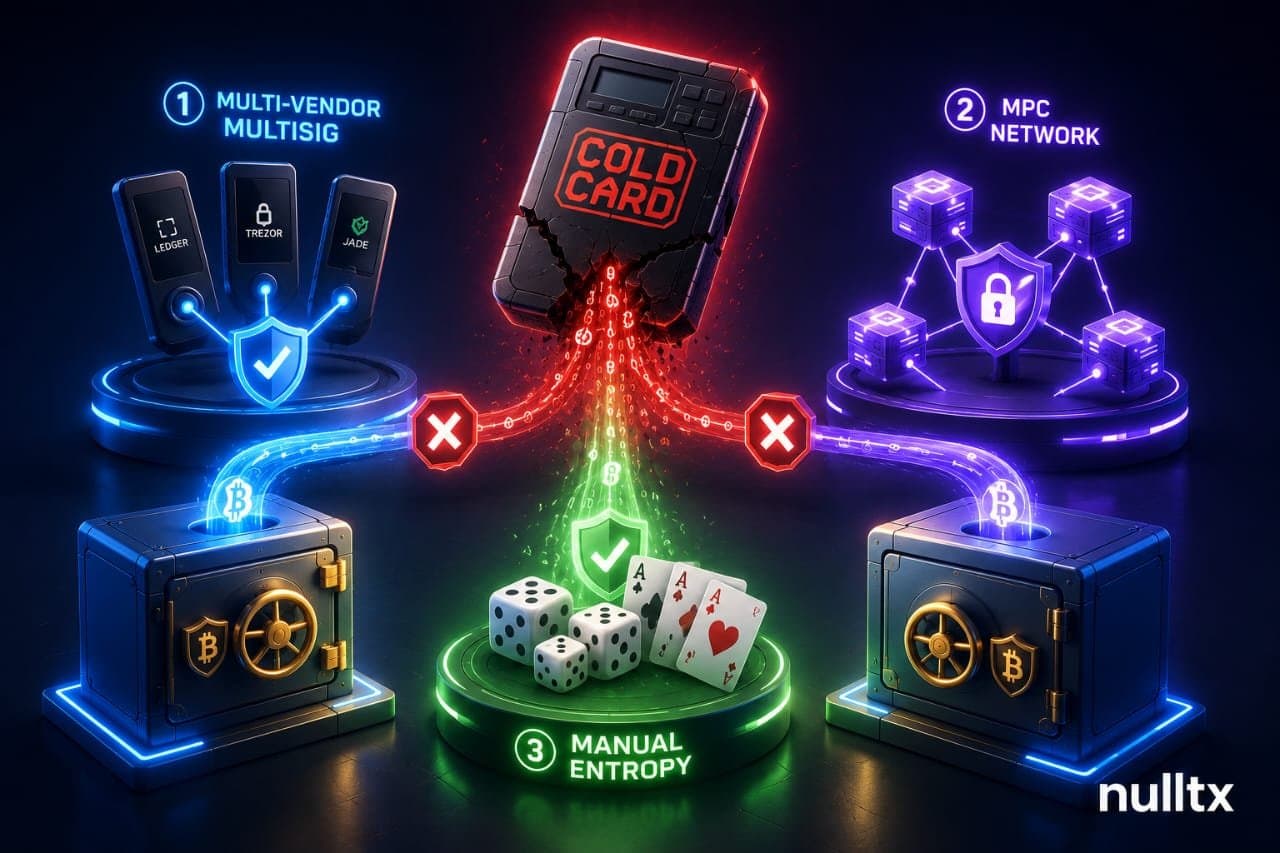
"The weakness was invisible until the money vanished," says security expert 0xQuit, summarizing the shock felt by hardware wallet users after the recent Coldcard firmware flaw surfaced. Cold wallets, long trusted as a fortress for crypto storage, revealed a critical vulnerability in their seed generation process that led to the loss of approximately 594 BTC across 500 wallets.
The issue stems from flawed entropy in Coldcard's firmware, confirmed by Coinkite, the device’s maker. This flaw reduced randomness in cryptographic keys, meaning a generated seed could be predicted or duplicated by attackers without triggering obvious warnings. The fix requires more than just a software update: users must install patched firmware, generate entirely new seeds, and transfer assets off wallets linked to the compromised keys. Unfortunately, the patch cannot retroactively secure already compromised seeds.
Despite features like PIN protection, air gaps, and secure elements, the compromised seed undermined the security of these hardware wallets entirely. This event highlights the risk of relying on a single device or manufacturer for safeguarding significant crypto holdings. Experts now urge holders to adopt multi-vendor multisignature setups or threshold cryptography solutions, spreading key shares geographically or using techniques such as Shamir secret sharing to avoid a single point of failure.
Block, the company behind the Bitkey wallet, quickly launched an investigation after the breach became public, though they confirmed none of their products were affected. This incident serves as a stark reminder that even air-gapped devices are not invulnerable, pushing users towards diversified custody methods. For anyone with substantial crypto assets, sticking with one cold wallet is no longer enough. Broader strategies involving multiple devices and independent key generators are the new gold standard to prevent a repeat of such losses.
This content is informative and does not constitute financial advice.