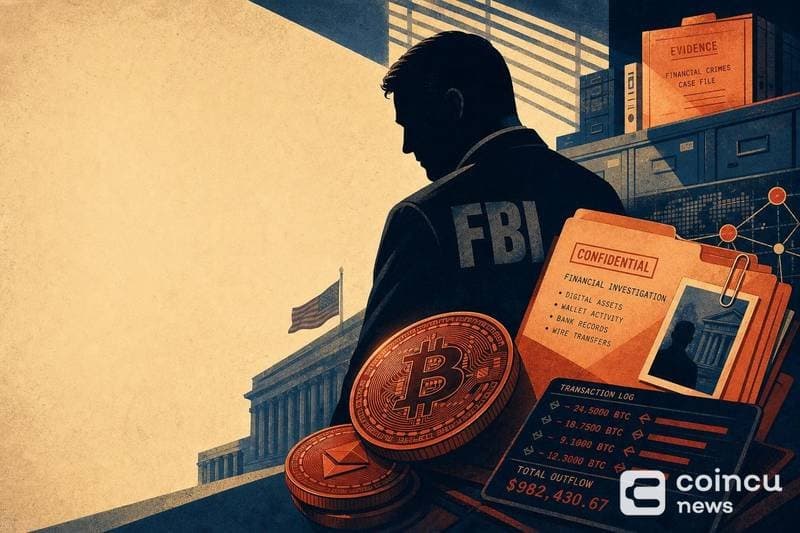
Nearly $1 million in cryptocurrency vanished into the hands of someone who should have known better. A former FBI agent now faces charges for siphoning digital assets while leaning on ChatGPT to guide investment moves. The arrest shows how even those trained to spot crime can fall prey to the same temptations that trap ordinary people in the crypto space.
The defendant allegedly took advantage of his position and access to move assets that didn't belong to him. What stands out here isn't just the theft itself, but the method. Rather than relying on personal market knowledge or traditional financial advice, court documents indicate he turned to an AI chatbot for investment guidance. It's a peculiar detail that speaks to how casually people treat cryptocurrency markets, treating billion-dollar decisions the way they might ask a search engine for restaurant recommendations.
This case lands at a moment when law enforcement is still figuring out how to police crypto properly. An FBI agent, of all people, should have understood the digital forensics that could trace his moves. Every transaction leaves a mark. Every wallet address can be followed. Yet he proceeded anyway, suggesting either carelessness or confidence that his background would shield him from consequences.
The incident also highlights the gap between AI hype and reality. ChatGPT doesn't actually give financial advice worth much. It processes patterns from training data and generates plausible-sounding responses. Using it as an investment oracle is like asking a parrot for portfolio strategy. That someone with law enforcement credentials thought this was a legitimate approach to managing stolen money says something troubling about how technology is being adopted without basic critical thinking.
For the crypto community, this serves as a reminder that theft and fraud aren't problems unique to decentralized finance. They follow money wherever it goes. The tools change, the schemes adapt, but the fundamentals remain. Someone with access took what wasn't theirs. Digital currencies made the theft possible, but they also made it traceable. That's the part the defendant apparently missed.
This article is informational only and does not constitute financial or legal advice.