Etched, a startup founded in 2022, has pulled in roughly $800 million in total funding and signed over $1 billion in customer contracts for its transformer-specific chip called Sohu. Its new partner, Andreessen Horowitz, is now publicly calling AI inference "the most important workload of our era." That's a pointed statement from one of Silicon Valley's most influential venture firms.
What the Sohu chip actually does
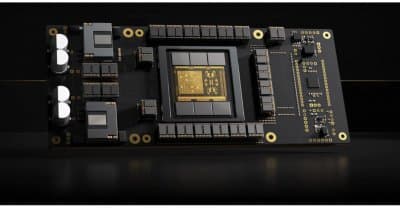
Sohu is an application-specific integrated circuit built to run exactly one type of model architecture: transformers. That means every major LLM in production today, GPT-style or otherwise, is precisely what this chip was designed for. No general-purpose flexibility, no compromise. Etched built it on TSMC's N4P process node and has already completed an A0 tape-out, which means the physical design has gone to TSMC for manufacturing. First racks are scheduled to ship in summer 2026.
The performance claims are aggressive. Etched says Sohu delivers more than 10x the throughput of Nvidia's H100. Some estimates go further, suggesting a single Sohu server could replace around 160 H100 units. If those numbers hold up in production, the economics for inference-heavy workloads shift dramatically.
The a16z bet rests on a straightforward observation: training a model happens once, but inference runs constantly, at scale, across every product that touches an end user. As AI moves from research into enterprise software and consumer apps, inference is where the compute bill actually lives. That's the market Etched is targeting, and it's enormous.
Valuation jumping, but the risk is real
In late 2025 Etched closed a $500 million round at a $5 billion post-money valuation. The company is now reportedly in talks for a new round that would peg its value at close to $20 billion, a near-quadrupling in a matter of months. That trajectory puts it in the same conversation as other AI infrastructure bets reshaping how markets are pricing compute exposure heading into the second half of 2026.
The concentrated risk here is hard to ignore. ASICs live or die by the architecture they're built for. If the industry pivots away from transformers toward some successor paradigm, Sohu becomes a very expensive paperweight. Etched is essentially staking its entire existence on transformers staying dominant for at least the next several years. That's a reasonable bet today. Whether it holds through a fast-moving AI landscape is the question that keeps investors up at night.
The summer 2026 shipping timeline is the first real test. Working hardware at the claimed performance levels would put serious pressure on Nvidia's inference business and validate a16z's framing in a way that no press release can.
This article is for informational purposes only and does not constitute financial or investment advice.