Circle's CEO: USDC's Accumulated Network Effects Give It an Edge That Open USD Will Struggle to Match
Circle CEO Jeremy Allaire argues that USDC's near-decade of infrastructure investment and network integrations give it a durable edge that the newly launched Open USD consortium will find hard to replicate. He also challenged consortium governance models while welcoming the new entrant to the stablecoin ecosystem.
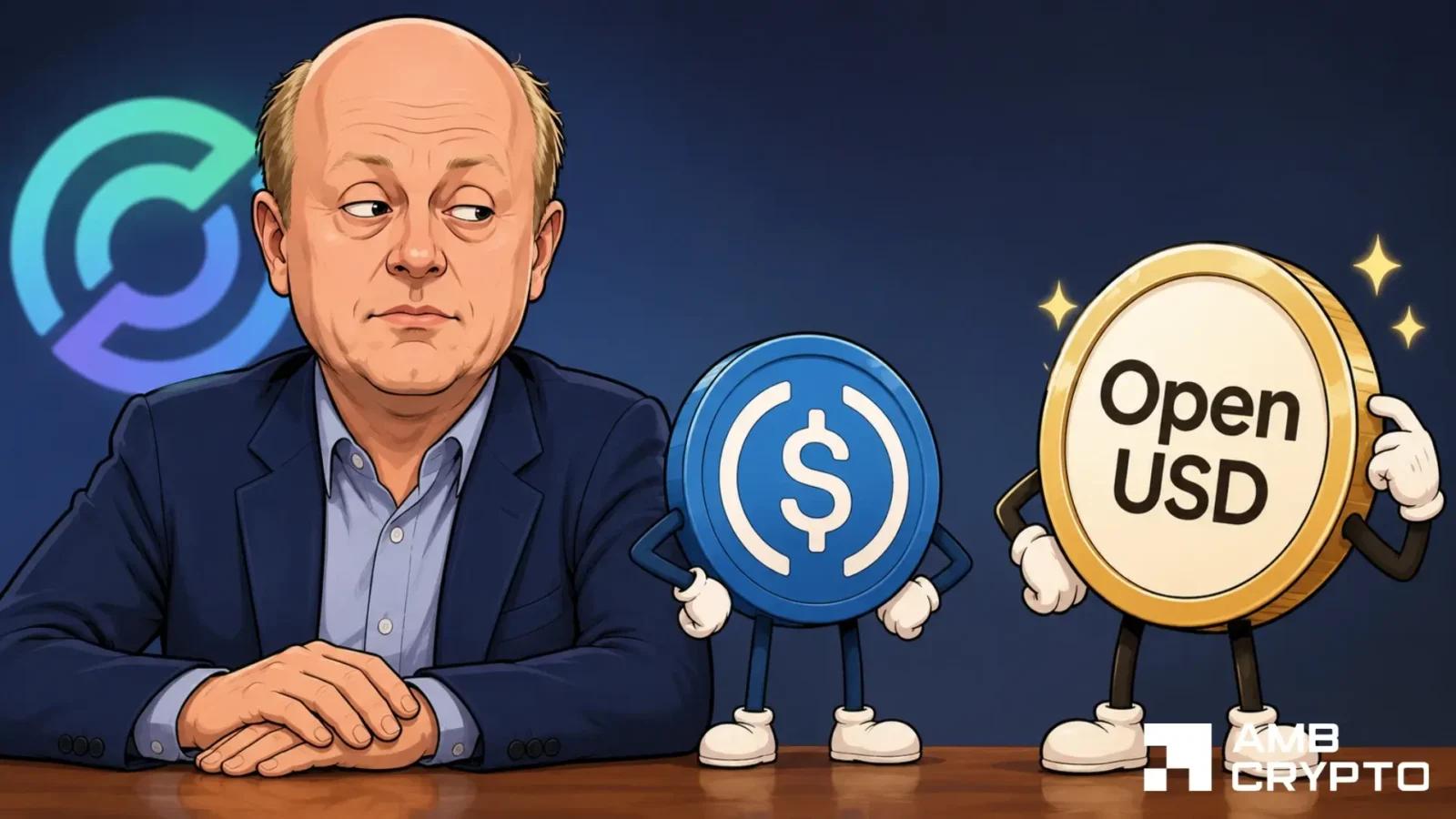
Circle's chief executive Jeremy Allaire has stepped forward to defend USDC's standing in the stablecoin market following the debut of the Open USD consortium, asserting that lasting dominance in the space comes down to deeply rooted network effects rather than pricing structures or shared governance arrangements.
In an extensive post published on X, Allaire extended a welcome to Open USD as a new participant in the stablecoin ecosystem. However, he was quick to emphasize that Circle's nearly ten years of continuous investment in liquidity infrastructure, regulatory licensing, and developer tooling have built a competitive moat that would be exceptionally difficult for any newcomer to replicate.
Allaire's core argument frames stablecoin networks less like conventional financial instruments and more like internet platforms — systems whose utility and value expand organically as more developers, enterprises, and financial institutions choose to integrate them. In his view, USDC's growth has been driven by thousands of such integrations, each one reinforcing liquidity, broadening interoperability, and deepening overall demand for the token.
The Circle CEO pointed to specific infrastructure initiatives as evidence of the company's technical commitment: the Cross-Chain Transfer Protocol (CCTP), the Gateway product, and a suite of additional interoperability tools. Beyond technology, he highlighted years of groundwork laid across global banking relationships, reserve management practices, and multi-jurisdictional regulatory approvals.
To illustrate USDC's current market position, Allaire cited data from blockchain analytics firm Artemis showing that USDC processed close to $30 trillion in on-chain transactions during the first quarter of 2026. That figure represents approximately 80% of all dollar-denominated stablecoin transaction volume for the period. USDT accounted for the remaining 20%, while every other dollar-pegged stablecoin combined contributed less than 0.5% of total on-chain activity.
A substantial portion of Allaire's post took direct aim at Open USD's key selling points, which include fee-free minting and redemption, shared reserve economics, and consortium-based governance. On the fee question, Allaire contended that redemption policies are ultimately driven by broader market forces rather than published fee schedules, noting that Circle already distributes the majority of its income to distribution partners while retaining enough revenue to keep investing in its platform.
His skepticism was sharpest when addressing large consortium governance models. In his assessment, organizations made up of many large and competing companies tend to move slowly and struggle to innovate because of conflicting priorities and cumbersome decision-making processes. He drew on firsthand experience to support this point: "We actually tried this in the early days of USDC," Allaire wrote, explaining that Circle ultimately found targeted strategic partnerships far more productive than broad industry coalitions.
Allaire also took a moment to address market speculation around Coinbase's involvement with the Open USD initiative. He clarified that Circle and Coinbase's collaborative relationship around USDC "remains as strong as ever," and expressed confidence that many of Open USD's founding members would continue using USDC in parallel with the new network.
Despite his pointed critique of the consortium approach, Allaire closed on a constructive note, welcoming Open USD into the wider stablecoin landscape and reaffirming Circle's stated intention to support multiple stablecoin issuers through its growing suite of infrastructure products. The message was clear: competition is welcome, but Circle believes its head start is not easily closed.