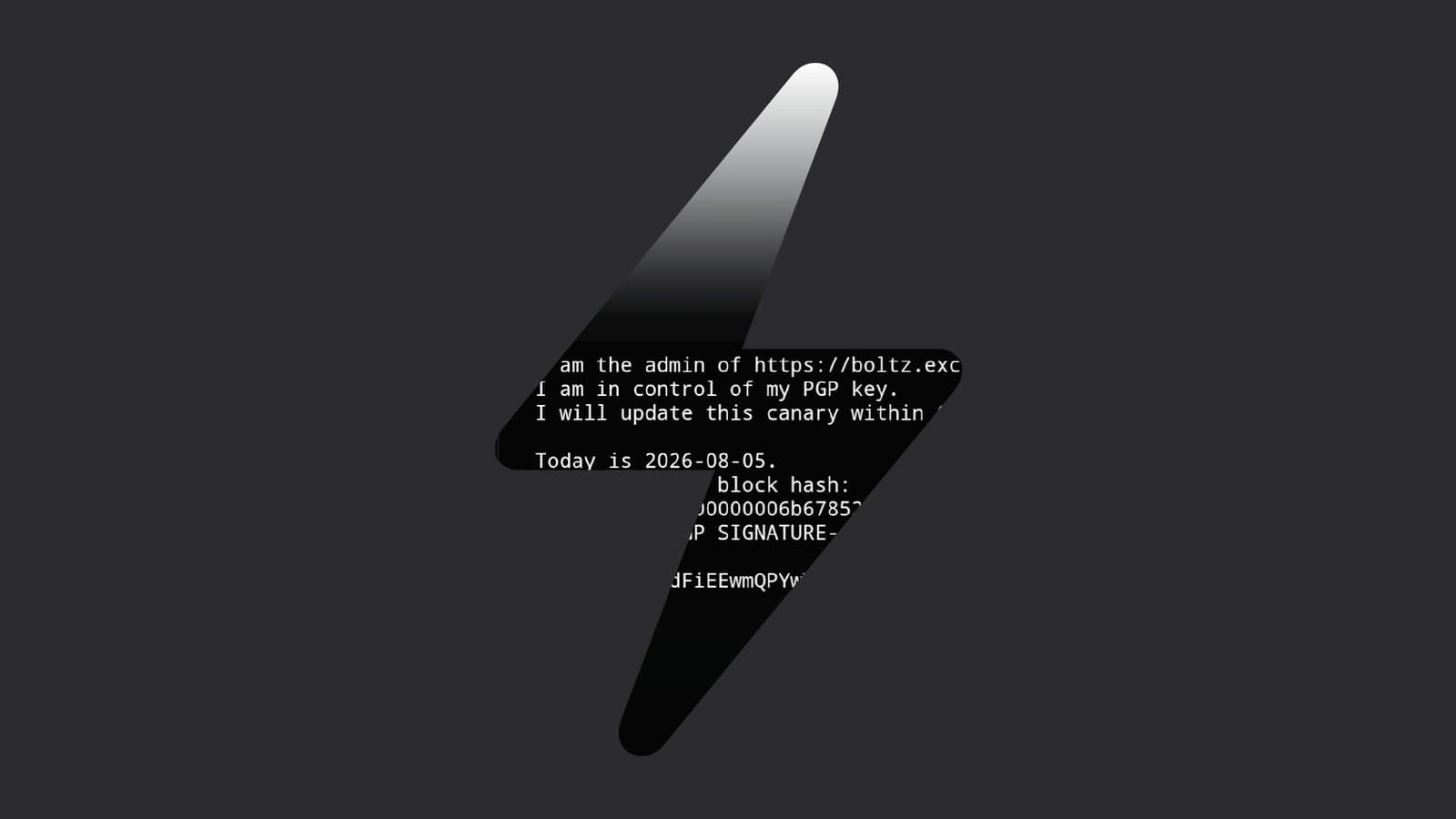
Boltz let its warrant canary expire for five days, then rushed to renew it on August 5 after the bridge had already shut down its swap service. The timing fueled immediate speculation that the Bitcoin infrastructure team might be under government investigation.
A warrant canary is essentially a periodic public statement saying a service hasn't received secret legal demands. When companies renew it on schedule, users know they're operating freely. When they miss the deadline, silence becomes a warning signal. Boltz's own documentation told users to "assume the worst" if renewal failed.
The bridge's last canary was dated May 31, promising a 60-day refresh window that closed July 30. Swaps went offline August 3. The new signed message didn't appear until two days later. In crypto infrastructure circles, that gap looked suspicious.
Service down, suspicions up
Boltz suspended its entire swap service that bridges Bitcoin between mainchain, Liquid, and Lightning Network after months of what it called "AI-assisted probing." Attackers iterated faster than the small team could patch vulnerabilities. Users of dependent wallets like Bull Bitcoin and Aqua suddenly couldn't complete transactions.
The combination hit hard. A service failure plus a lapsed warrant canary read like duress to observers. Some argued the government might be involved in either the attacks or the shutdown itself.
The renewal and the doubt
Boltz published a fresh PGP-signed canary stating "0 requests for information of any kind by any third parties including but not limited to government agencies." The signature validated cleanly. An admin confirmed the message was authentic.
A team member claimed they simply forgot during the swap freeze, a plausible explanation for a five-person operation under attack. But timing matters in crypto. The skepticism lingered anyway. Other projects have abandoned warrant canaries entirely, raising questions about whether the practice still means anything when enforcement pressure mounts.
This article is informational only and does not constitute financial or legal advice. Readers should conduct their own research before making decisions about cryptocurrency services.