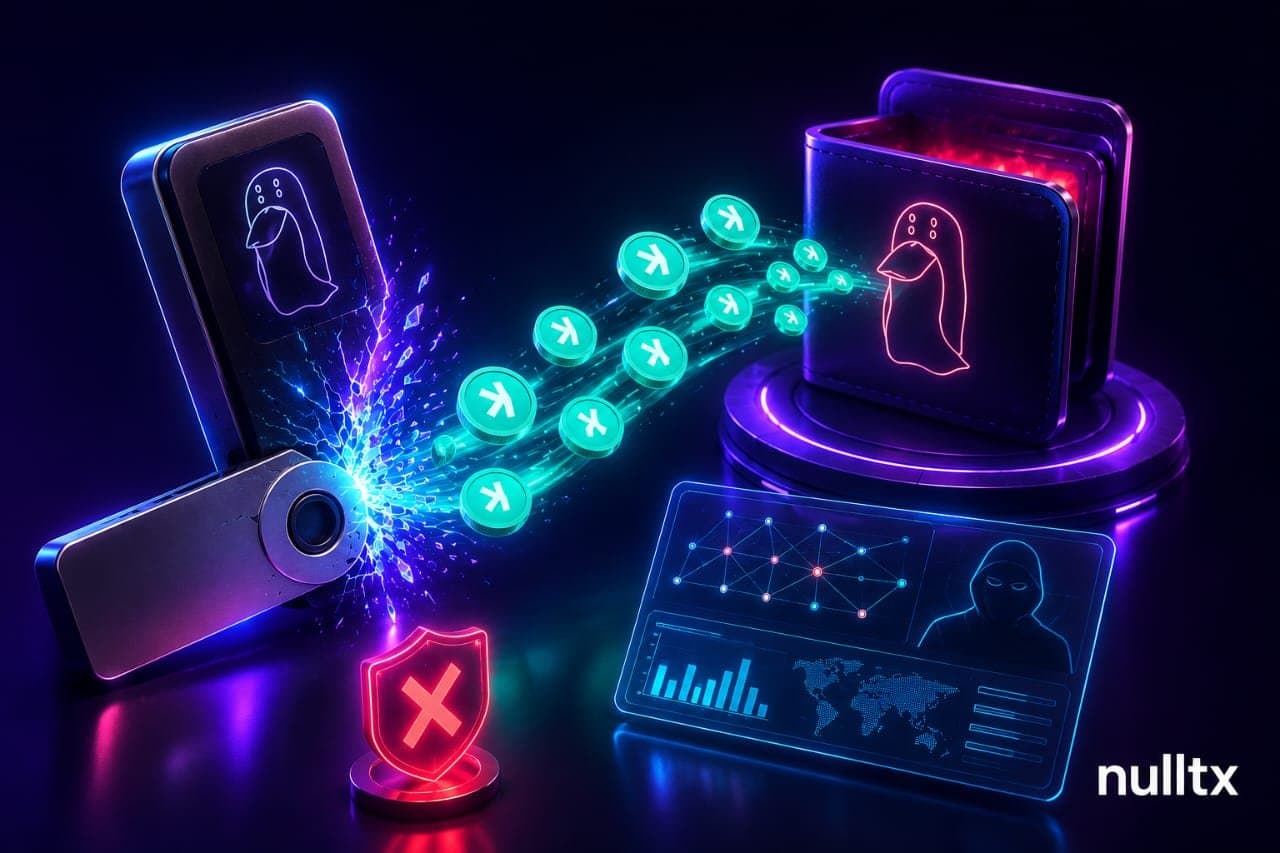
Nearly 400,000 KAS, worth around $11,000, disappeared from a Ledger hardware wallet last week. The owner had moved 5,520 KAS from Bybit to their cold wallet, opened the app to confirm the deposit, and found a zero balance. The full 395,690 KAS had already been sent to an unknown address. The small incoming transfer arrived shortly after, almost as if nothing had happened.
The victim was clear: no transaction was authorized, no signing took place. They told the community on X it might be their last day on the platform, and that they wished they had never put their savings into crypto at all. Hard to read. Harder still to dismiss.
Why ZachXBT Said No
The victim reached out to ZachXBT, the most visible on-chain investigator in crypto. The reply was public and direct. The case falls below his minimum threshold, and Kaspa is not a chain that has funded him through grants or a retainer. His time goes to people and projects that actively support his work. No free lunch, in his own words.
That answer stings, but the volume behind it is worth understanding before passing judgment. ZachXBT gets 20 to 30 DMs or mentions every single day, all asking for free help. He takes on 3 to 4 new cases a month. Do the arithmetic and you get somewhere between 600 and 900 requests piling up by month's end, with only a handful ever getting a response. At that scale, a $250,000-plus minimum threshold is less a policy and more a survival mechanism.
The Gap No One Is Filling
What this incident exposes is a structural blind spot in the self-custody world. Victims losing eight or nine figures get attention. Victims losing a few hundred dollars shrug it off. The mid-tier victim, someone whose $11,000 represents genuine life savings, falls into a category where:
- Centralized exchanges offer no help because the funds left their platform cleanly
- Top investigators have thresholds the loss cannot meet
- Law enforcement rarely has the on-chain expertise to act quickly, if at all
- Ledger itself has not publicly commented on the unauthorized transaction
Cold wallets were supposed to be the answer. For this user, a Ledger device was the reason they avoided banks entirely. The trust placed in hardware wallet security is exactly what made the loss so disorienting. An unauthorized outgoing transaction on a device that never left their possession raises questions that remain unanswered.
The KAS community rallied around the post with sympathy, but sympathy does not recover funds. Until there is a funded, accessible channel for mid-range theft victims, the gap ZachXBT described so plainly is going to keep swallowing cases like this one.
This article is for informational purposes only and does not constitute financial advice or a recommendation to buy, sell, or hold any asset.