Why Venice AI's $1B Valuation Signals a Privacy War Inside the AI Industry
Venice AI's $1 billion valuation is more than a funding headline — it reflects growing conviction that privacy-native AI could become a structural competitive advantage as regulatory pressure on Big Tech intensifies.
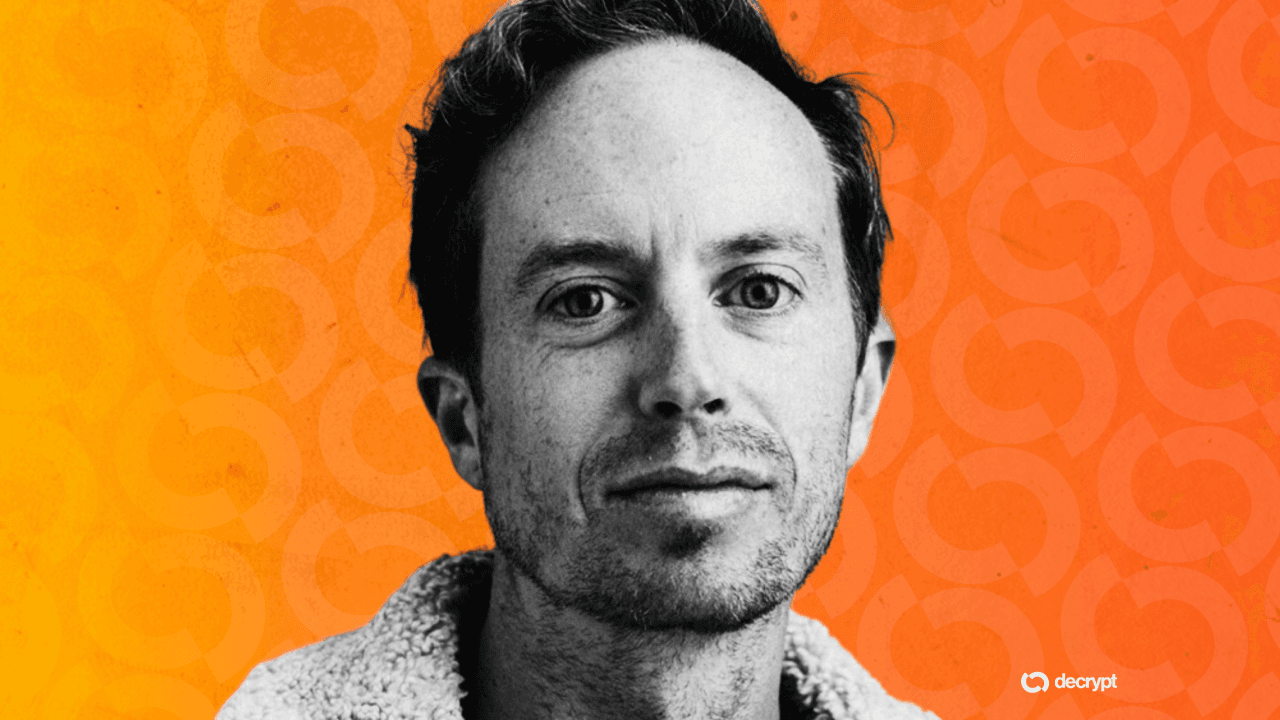
The artificial intelligence industry has a data problem — and Venice AI, the privacy-focused platform co-founded by crypto veteran Erik Voorhees, is betting $1 billion that enough people care about it. The company's freshly minted $1 billion valuation is not just a funding milestone; it is a statement about where the next battleground in AI development will be fought: not on capability, but on trust.
Venice AI positions itself as a direct rival to ChatGPT and similar large language model platforms, with one critical differentiator — it does not store, log, or monetise user conversations. In an era where mainstream AI providers are under increasing regulatory scrutiny over data handling, this is not a niche selling point. It is a structural wedge that Voorhees, best known as the founder of ShapeShift, is using to carve out a distinct market segment.
Why does this matter beyond the headline number? Because $1 billion in valuation for a privacy-native AI platform suggests that institutional capital is beginning to take seriously the idea that data sovereignty will become a competitive moat, not just an ethical preference. The crypto community has long argued that users should control their own data — Venice AI is essentially transplanting that ideology into the AI product layer, where it has far more mainstream reach.
For investors and market observers, the timing is deliberate. Regulatory pressure on Big Tech AI is mounting across the EU and increasingly in the US. Any platform that can credibly claim compliance-by-design — meaning privacy is architectural, not bolted on — stands to benefit disproportionately as enforcement tightens. Venice AI's model, where inference runs in a way that avoids centralised data retention, is precisely this kind of structural advantage.
Erik Voorhees' involvement adds an ideological dimension that is inseparable from the product thesis. His track record — from early Bitcoin advocacy to building ShapeShift as a non-custodial exchange — demonstrates a consistent philosophy: remove the intermediary, return control to the user. Venice AI is that philosophy applied to conversational AI. The $1 billion valuation signals that this philosophy is now commercially viable at scale, not merely ideologically coherent.
The competitive implications are significant. ChatGPT, Google Gemini, and Anthropic's Claude all operate on models that involve varying degrees of data retention and training feedback loops. A well-funded, privacy-native alternative with credible backing forces these incumbents into a defensive posture — either they must improve their privacy guarantees or risk losing the segment of users and enterprises for whom data confidentiality is non-negotiable. Legal firms, healthcare providers, financial advisors, and government contractors are obvious early adopters.
For the crypto and Web3 investment community specifically, Venice AI's valuation carries a secondary signal: the intersection of crypto-native thinking and AI infrastructure is generating real enterprise value. This is not a token project or a whitepaper promise — it is a billion-dollar platform built on principles that crypto pioneers have championed for over a decade. That convergence deserves more analytical attention than it is currently receiving.
The road ahead is not without risk. Competing on privacy while scaling inference infrastructure is technically demanding and expensive. Mainstream user acquisition requires overcoming the inertia of free, deeply integrated incumbents. And if Big Tech moves aggressively on privacy features — as Apple has repeatedly demonstrated is possible — Venice AI's differentiation could narrow. Still, the $1 billion mark is a credible signal that the market believes the privacy-AI thesis has legs, and that Erik Voorhees has found a second act as consequential as his first.