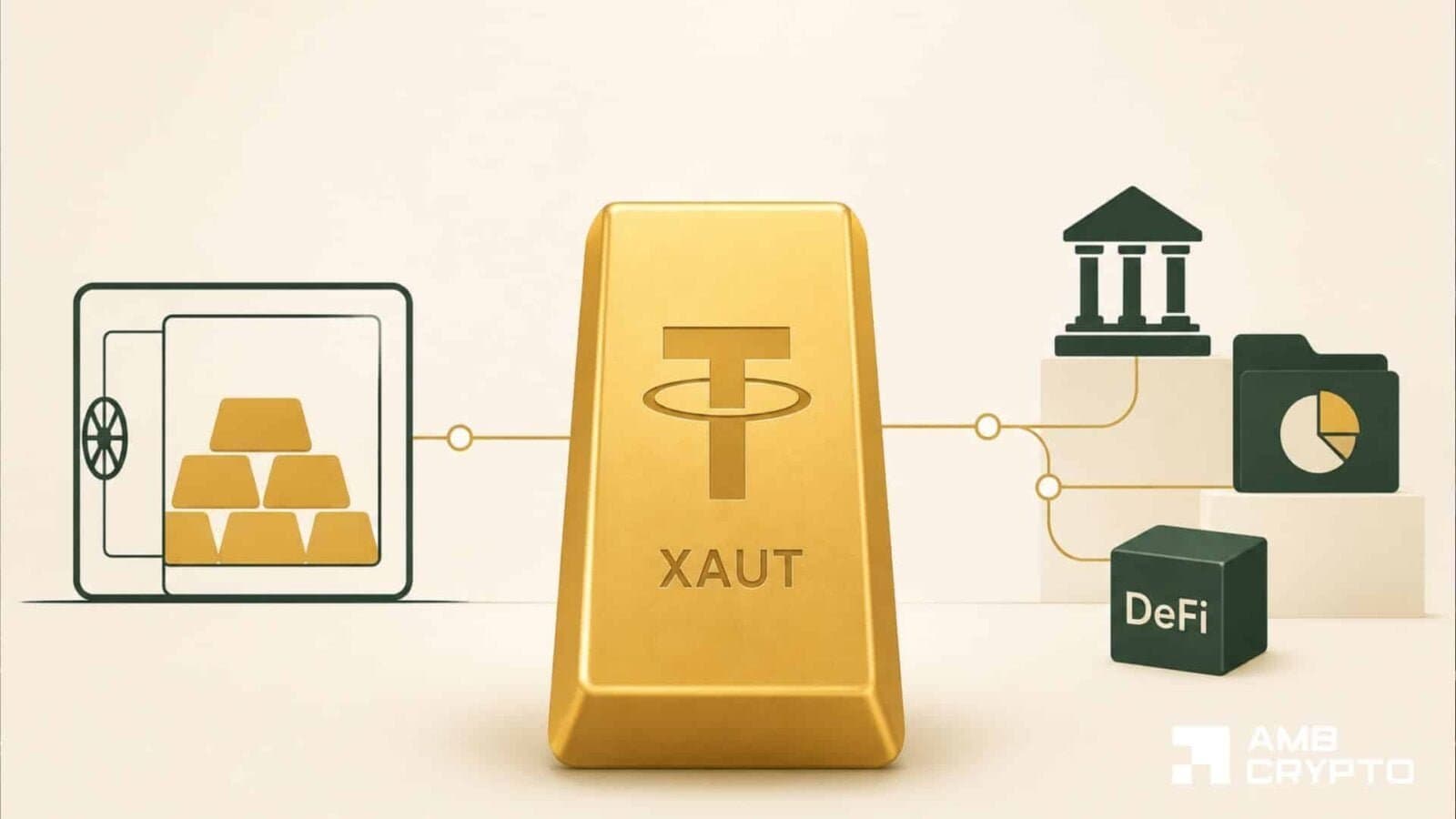
Gold tanked 14.1% in Q2, closing the quarter at $4,008 per ounce. Yet Tether Gold holders went the opposite direction, adding 53,000 XAUT tokens worth roughly 1.66 tonnes of physical metal.
Customer holdings jumped 9.5% even as bullion prices collapsed. That's the move of people treating weakness as a buying opportunity, not a warning sign.
Tether CEO Paolo Ardoino put it bluntly: holders aren't just buying when gold rises. They're using market dips to load up on physical metal exposure. The company still backs everything with 707,747 fine troy ounces sitting in reserves.
The shift reveals something deeper about how crypto investors think about risk. They're not chasing XAUT for quick gains tied to price swings. Instead, they want a stable store of value that lives on blockchain, accessible 24/7 without touching traditional banking infrastructure.
Tokenized gold does something a gold bar sitting in a vault can't: it settles on chain, trades instantly, and plugs directly into decentralized finance. That flexibility matters when you're trying to stay liquid without leaving the digital asset ecosystem entirely.
XAUT now commands $2.85 billion in market cap, dominating the tokenized commodities sector which sits around $5.6 billion overall. But here's the catch: only $230 million of that, roughly 8%, actually flows through DeFi protocols as active collateral.
Most holders treat XAUT like a savings account. They buy it, they hold it, they wait. Moving beyond that defensive posture requires proving these tokens work as productive capital that generates returns beyond just sitting there. That conversation is just beginning.
This article is informational only and does not constitute financial advice. Cryptocurrency markets are highly volatile and carry significant risk.