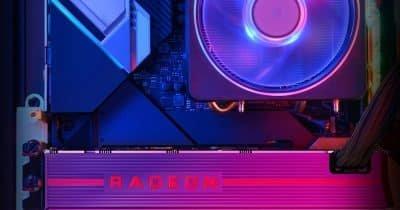
Turing Inc., a Tokyo-based startup focused on generative AI-powered self-driving technologies, recently announced a strategic shift by incorporating AMD GPUs into its hardware configuration. This decision marks a significant pivot from its previous strategy, which relied heavily on Nvidia's GPU infrastructure, thereby raising important questions about the competitive landscape in the AI compute sector.
The Background of Turing's Evolution
Founded in 2021 and led by CEO Issei Yamamoto, Turing has been rapidly advancing in the autonomous driving domain. The company completed its Series A fundraising in November 2025, securing approximately ¥15.27 billion (around $98.6 million) in equity and debt investments. Notably, part of these funds were aimed at ingesting Nvidia's cutting-edge chips, H200 and B300, targeting an impressive theoretical performance of around 0.37 EFLOPS.
The flagship initiative, dubbed “Tokyo 30,” is boldly aiming for a deployment of fully autonomous vehicles navigating Tokyo's complex streets by the end of 2025, with broader commercialization plans extending to 2030. Collaborations with heavyweights like Subaru and DENSO under Japan's METI/NEDO GENIAC initiative further illustrate Turing's robust integration with traditional automotive sectors.
The AMD Connection
Historically, Turing's partnership announcements and cloud infrastructure developments have revolved around Nvidia's hardware offerings. The recent shift towards AMD comes without verified reports of prior AMD collaborations, urging investors to approach this news with caution. It remains unclear whether this change will manifest as a full-scale infrastructure partnership akin to the existing GMO-Nvidia arrangement, or if it will be a more limited engagement.
Implications for Investors in the AI-GPU Landscape
The implications of Turing’s pivot could be profound. Investors need to closely monitor future disclosures regarding the nature and extent of AMD's involvement in Turing's projects. Should this partnership mature into a comprehensive infrastructure strategy, it could suggest an increasing competition between AMD and Nvidia in the AI and self-driving vehicle sectors.
As companies like Turing push the boundaries of autonomous systems and artificial intelligence, such shifts could impact the overall market dynamics and valuations in both the AI and semiconductor industries. Investors should remain vigilant about how these alliances might alter trajectories in technology development and market share as Turing aims to redefine self-driving solutions.