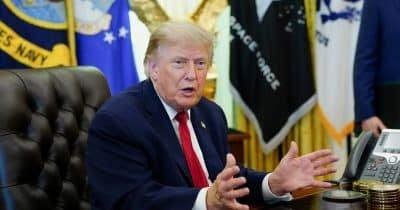
Former President Donald Trump recently asserted that the United States is 'taking over crypto', a statement reflecting the increasing significance of the digital asset sector in the nation’s economic framework. Simultaneously, reports indicate that Trump's family has amassed over $1.4 billion in crypto-related income during 2025, an impressive figure that invites scrutiny concerning the alignment of personal financial interests with public policy.
The Financial Implications
The staggering income attributed to Trump's family from cryptocurrency ventures includes approximately $635 million generated through the $TRUMP memecoin and an estimated $600 million from World Liberty Financial, a decentralized finance platform. Such immense financial benefits directly influence how policy surrounding crypto is crafted, raising ethical questions about the interrelationship between personal investments and public leadership.
Changing Regulatory Landscape
In March 2025, Trump implemented an Executive Order creating a Strategic Bitcoin Reserve, aimed at positioning Bitcoin as a legitimate reserve asset within the US. Following this, the GENIUS Act established an initial federal regulatory framework for stablecoins, crucial as these dollar-pegged tokens form the backbone of cryptocurrency infrastructure. This marks a notable shift from the previously decentralized and fragmented state-level oversight that characterized the regulatory landscape.
The GENIUS Act’s regulations could unlock vast institutional capital as it provides a clear set of rules for banks, asset managers, and payment companies hesitant to engage with stablecoins before. The shift towards a federal framework is significant, especially as the European Union and several Asian markets have already begun formalizing their own regulations.
Investor Considerations
The implications of these regulatory changes are profound for investors. The Strategic Bitcoin Reserve could enhance Bitcoin's legitimacy as a valuable asset, encouraging more traditional investors to consider its integration into their portfolios. Additionally, the federal oversight provided by the GENIUS Act could attract substantial institutional investment previously stifled by uncertainty. This environment may lead to increased trading volumes and liquidity in the crypto market, fostering growth and innovation.
However, the intertwining of Trump's personal crypto ventures with his policymaking raises significant ethical concerns. The launch of a memecoin by a sitting president inherently infuses it with cultural relevance. Consequently, such initiatives may not only shape market dynamics but could also invite scrutiny and debate about the ethical implications of blending personal gain with governance.
As the regulatory frameworks evolve, the US sees an opportunity to become the 'crypto capital of the world' as Trump has vowed. However, investors must remain vigilant, as the political underpinnings of these regulations may shift in response to changing administrations and market conditions.
For more context on how regulatory changes could impact market dynamics, see what MSTR's Bitcoin sale means for investor confidence and what the launch of 'Trump Accounts' means for traditional and crypto investors.