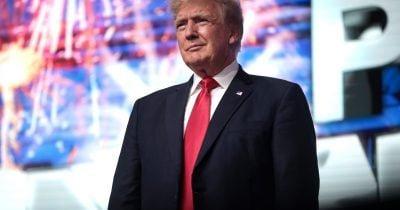
FIFA has made an unprecedented decision to reverse a World Cup red-card suspension for the first time in 64 years, largely due to intervention from the United States government. On July 5, FIFA’s Disciplinary Committee suspended a one-match ban imposed on US striker Folarin Balogun after he received a red card during a match against Bosnia and Herzegovina, following calls from President Donald Trump.
The incident occurred on July 1 when Balogun’s actions led to the automatic suspension set by FIFA rules. However, after Trump's advocacy and his direct communication with FIFA President Gianni Infantino, FIFA introduced a conditional term where Balogun's suspension would be suspended for a year, pending any further infractions.
This decision came into the spotlight as Balogun played in the Round of 16, despite the competitive integrity questions it raises. Critics, including Belgium's national team and UEFA, have voiced concerns over the potential for political influence on sports governance. The fact that Belgium's team had to face a player who should have been benched under normal regulations underscores the importance of fairness in competition.
Moreover, this development brings attention to FIFA's structure and how external pressures can shape its decision-making. The comparison to the last notable reversal in 1962 highlights not just the rarity but also the evolving complexities of international soccer in a world vastly different from the past. Where FIFA had fewer nations and less scrutiny back then, today's environment is much more globalized and financially linked.
Furthermore, the provisional nature of Balogun's suspension raises significant questions about FIFA’s governance. The one-year probation resembles a fragile regulatory environment that may set a troubling precedent. In a landscape already scrutinized for its decision-making process, this episode illustrates the precarious balance between sports integrity and political advocacy.
The implications of this incident could extend beyond the pitch, impacting how organizations might manage political relationships moving forward, especially in light of FIFA's ongoing experiments with advanced technologies such as blockchain for ticketing and fan engagement. The FIFA-Trump incident will likely serve as a case study on the ramifications of centralized sports decision-making under political pressure.
This article is for informational purposes only and should not be considered financial advice.