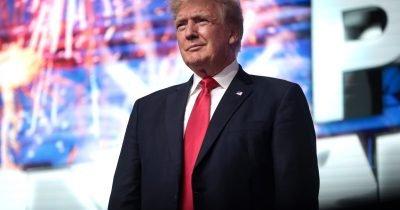
In a significant shift in foreign policy, President Donald Trump recently announced plans to remove Syria from the US State Sponsors of Terrorism list. This development, which will undergo a 45-day congressional review, could not only reshape capital flows in the Middle East but also affect investment strategies globally, including the cryptocurrency market.
Understanding the Implications of Syria's Delisting
The removal of Syria from the terrorism designation signifies a pivotal change in how the US perceives the region and could open extensive avenues for investment. Previously, Syria's designation, active since 1979, created barriers that limited its access to international financial systems, particularly for Gulf investors eager to engage in reconstruction efforts post-Assad.
- Syria has been listed as a State Sponsor of Terrorism since 1979.
- A 45-day congressional review period has been announced following the delisting.
- Sanctions on Syria were lifted effective July 1, 2025.
- Al-Sharaa's political rebranding allowed him to gain legitimacy in international forums such as NATO.
The recent executive order to lift sanctions on Syria was a precursor to this delisting, effectively signalling that the US may now view Syria’s interim government as a legitimate partner rather than a pariah state. This shift in perception is critical, as it enables Gulf nations looking to expand their roles in the region to invest without intricate compliance hurdles.
The Ripple Effect on Crypto and Global Markets
Sanction regimes significantly influence global financial dynamics, notably in the cryptocurrency space. Previous sanctions relief, as seen with Iran and Venezuela, led to surges in local demand for digital assets, particularly dollar-pegged stablecoins. Similar trends may emerge in Syria, where a large segment of the population has been excluded from traditional banking infrastructure for years.
The unfolding situation presents cryptocurrency investors with a unique opportunity to monitor how these geopolitical moves affect demand and adoption in previously isolated markets. As Gulf nations look to deploy capital in Syria, investment in digital currencies may serve as an essential liquidity tool amidst traditional banking restrictions.
What to Watch Next
As the congressional review unfolds, the political dynamics will be crucial in determining whether Syria successfully exits the terrorism list. Investors and market analysts should keep a close eye on potential responses from Congress, as well as any indications of increased capital flows resulting from this new diplomatic stance. Furthermore, ongoing developments in the regional geopolitical landscape will likely inform future market opportunities.
This material is for informational purposes only and does not constitute financial advice.