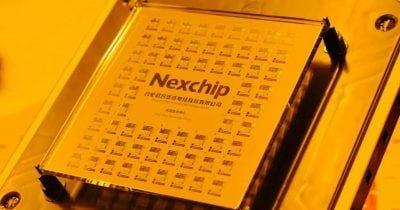
Nexchip Semiconductor Corporation recently marked its grand entrance onto the Hong Kong Stock Exchange, successfully raising around $890 million in what stands as one of the significant chip industry listings of the year. Priced at the upper limit of HK$32.30 per share, this dual-listing strategy not only capitalizes on the favorable investor sentiment but also underscores the increasing urgency for funding in the context of tight US export regulations.
Understanding the Significance
Nexchip's listing is more than just a financial maneuver; it is emblematic of the shifting dynamics in the global semiconductor landscape, particularly for Chinese firms facing mounting US export restrictions. This development is particularly impactful for a variety of reasons:
- Nexchip raised approximately HK$6.98 billion, with over half allocated for advancing its R&D efforts, especially in 22-nanometer process technologies.
- The company aims to funnel around HK$3.5 billion into its research initiatives, crucial for developing competitive chip solutions.
- A major portion of the proceeds will contribute to the establishment of a new manufacturing facility in Hefei, with an investment of $5.1 billion.
This strategic approach to raising capital allows Nexchip to enhance its technological capabilities and production capacity, positioning itself favorably in a market where cutting-edge technology is increasingly monopolized by leading players such as TSMC and Samsung.
Broader Context and Implications
In the face of stringent US sanctions limiting access to essential chip technology and equipment, Nexchip's move to the Hong Kong market highlights a broader trend among Chinese semiconductor companies looking for capital outside of mainland China. The company, which was already established on the Shanghai Stock Exchange, now leverages the Hong Kong capital markets to access financing crucial for sustaining growth.
The chip manufacturing sector is notoriously capital intensive, as evidenced by historical cost overruns in other major projects such as TSMC's Arizona factory and Intel's Ohio expansion. Therefore, investors should remain cautious while assessing Nexchip’s ambitious plans, especially regarding the timeline and budget for its new manufacturing facility.
What Lies Ahead
As Nexchip embarks on this expansion journey, there are several aspects to monitor closely:
- The execution of the $5.1 billion Hefei facility and its implications for Nexchip’s competitiveness.
- The company's progress in optimizing its 22-nanometer process technology and how it aligns with market needs in automotive and industrial sectors.
- Ongoing developments in US-China relations and further export restrictions that could impact Nexchip's operations.
In conclusion, while a revenue growth rate of 17.7% is commendable, it signals a need for Nexchip to amplify its performance in a highly competitive market. Investors should watch for how effectively the company translates its ambitious plans into reality in an environment undergoing dramatic shifts.
This material is for informational purposes only and does not constitute financial advice.