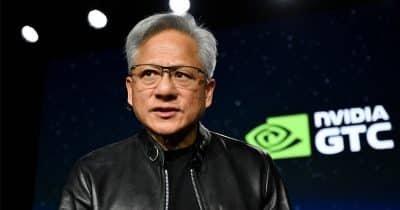
The recent collaboration between Microsoft and Nvidia marks a significant shift in the landscape of artificial intelligence. Announced at Microsoft Build 2026, this partnership presents a unified computing stack intended to streamline the development, deployment, and scaling of AI agents across a variety of platforms, including Windows devices and Azure cloud.
The Power of Hardware Integration
At the core of this initiative is Nvidia’s new RTX Spark lineup, which is poised to double the speed of agentic inference on Windows devices. This hardware upgrade enables local machines to support advanced AI functions without the need for constant connectivity to distant data centers. This shift not only improves efficiency but also enhances security and responsiveness, especially for enterprises deploying sophisticated AI systems.
Enterprise Solutions and Security Focus
For organizations requiring extensive computational resources, Nvidia's DGX Station offers a staggering 1 petaflop of computing power. Historically, such capabilities were accessible only to well-funded national laboratories, indicating a democratization of advanced AI technologies. Additionally, the introduction of Nvidia’s OpenShell secure runtime and Microsoft’s eXecution Containers enhances security by establishing isolated environments where AI agents can function without compromising the integrity of the broader system.
This collaboration stretches beyond hardware, delving into developer workflows through integrations with tools like GitHub Copilot and Microsoft Fabric, aiming to alleviate the challenges associated with building and deploying AI applications.
A Full-Stack Perspective on AI
This full-stack approach is particularly noteworthy. While many AI announcements tend to concentrate on isolated components whether chips, cloud services, or software this partnership encompasses all layers from personal computing to enterprise cloud solutions. Developers can prototype on powerful laptops, test locally, and subsequently scale on Azure without the need for extensive reengineering. Such seamless transition capabilities position Microsoft and Nvidia as frontrunners in AI infrastructure, leveraging both companies' strengths in hardware and software.
As the demand for enterprise-level AI solutions surges, how these companies activate their collaboration has implications for capital flows within the tech industry. With a firm commitment to developing a unified stack, Microsoft and Nvidia are signaling that substantial investments in AI infrastructure are imminent. This may accelerate the pace at which enterprises adopt AI technologies, prompting other players in the tech ecosystem to adapt or innovate to keep up. It also suggests a mounting opportunity for decentralized computing projects, given the local computational power now available.