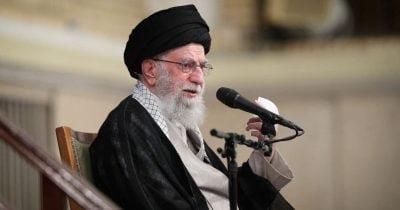
The recent mourning gatherings in Tehran following the assassination of Ayatollah Ali Khamenei have underscored the immense political vacuum left in Iran's leadership structure. Iranians have congregated for two consecutive days at the Mosalla Mosque, reflecting not only grief but also a critical moment in the nation’s governance.
Implications of Khamenei's Assassination
Khamenei, who presided over Iran for 37 years, was killed in a coordinated airstrike orchestrated by the U.S. and Israel, amplifying an already tense geopolitical dynamic. This assassination has significant implications as it has the potential to recalibrate Iran's internal authority and its stance towards external adversaries. The ongoing six-day mourning period serves as a complex backdrop to the palpable uncertainty surrounding the future of Iran’s political leadership.
Leadership Transition in Focus
The Interim Leadership Council has assumed control in the wake of Khamenei's death, yet the ultimate power will soon be decided by the Assembly of Experts, which is expected to elect a new Supreme Leader shortly. The significant turnout at the funeral highlights public engagement in this transition, pointing to a population deeply invested in maintaining stability following such upheaval.
Market Reactions and Predictions
The markets appear to be reacting with a sense of caution, as perceptions of instability could influence investment decisions moving forward. Current dynamics suggest that there is a low likelihood of a prolonged power vacuum extending into 2026, correlating with the Iranian regime’s historical propensity to consolidate power swiftly. Observers should closely watch the Assembly of Experts' announcements regarding the new Supreme Leader, as this will likely sway market sentiment.
What Lies Ahead
Looking ahead, potential successors like Mojtaba Khamenei might play pivotal roles in shaping both domestic and foreign policies. The evolving diplomatic landscape, particularly any changes in military engagements or economic sanctions, could further alter the trajectory of both Iran's internal politics and its international relations.
Thus, the mourning of Khamenei does not merely represent a tribute to a long-standing leader, but a critical juncture that could redefine the future political landscape of Iran.