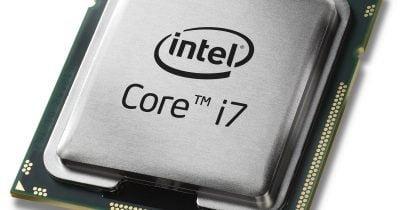
The first half of 2026 has witnessed a striking reversal in the semiconductor landscape, significantly affecting not only traditional markets but also the cryptocurrency sector. With Intel outperforming Nvidia by almost 14 times in stock performance, and AMD experiencing a substantial gain, there are critical implications for decentralized compute networks and former Bitcoin miners adapting to new realities.
Intel’s stock surged between 200% and 220% year-to-date, while AMD enjoyed a 114% climb. In contrast, Nvidia, revered as the leader in AI hardware, managed only a modest 15% gain the weakest first-half showing since 2022. Although Nvidia maintains a whopping 70% to 81% market share in AI accelerators by revenue, the shift indicates that investors anticipate potential disruptions in AI infrastructure economics.
The CPU Resurgence
Reports indicate that AMD garnered nearly $5.8 billion in data center revenue for Q1 2026, marking a remarkable 57% year-over-year increase, while Intel's data center and AI segment also surpassed $5 billion. This renewal of interest in CPU technology is primarily driven by the demands of Agentic AI workloads, which rely heavily on CPU performance for orchestration and inference tasks.
While GPUs are critical for training AI models, the inference aspect is where the real growth is manifesting. Intel, under new leadership, is gaining momentum, particularly with the anticipation surrounding its Crescent Island chip, which could revolutionize the cost dynamics of data processing.
Impact on Crypto Mining
The cryptocurrency mining sector is currently undergoing a seismic shift as many miners pivot toward AI compute hosting, repurposing their GPU farms to serve enterprise AI workloads. As chip pricing dynamics evolve due to increasing competition from AMD and Intel, mining operations stand to benefit from declining hardware costs.
Protocols focusing on distributing GPU and CPU resources for AI tasks are keenly aware of hardware expenses. The entry of competitors often leads to lower prices, thus easing the barriers for node operators in decentralized networks. Notably, Intel’s Crescent Island chip could be pivotal if it performs competitively at lower price points, reducing operational costs for decentralized GPU networks originally optimized for Nvidia’s hardware.
Investor Outlook
From an investment perspective, while Nvidia’s fundamentals remain robust, its stagnating stock amidst the rising titans of the semiconductor industry indicates a potential reevaluation of market strategies. As AMD and Intel continue to capture market share in data center and AI sectors, they could redefine the landscape under which crypto miners and decentralized networks operate. The increasing viability of cost-effective hardware options opens doors for innovation and growth, not only in AI but also in the crypto domain, reinforcing the cautionary adage that diversification in technology can lead to sustainable economic ecosystems.