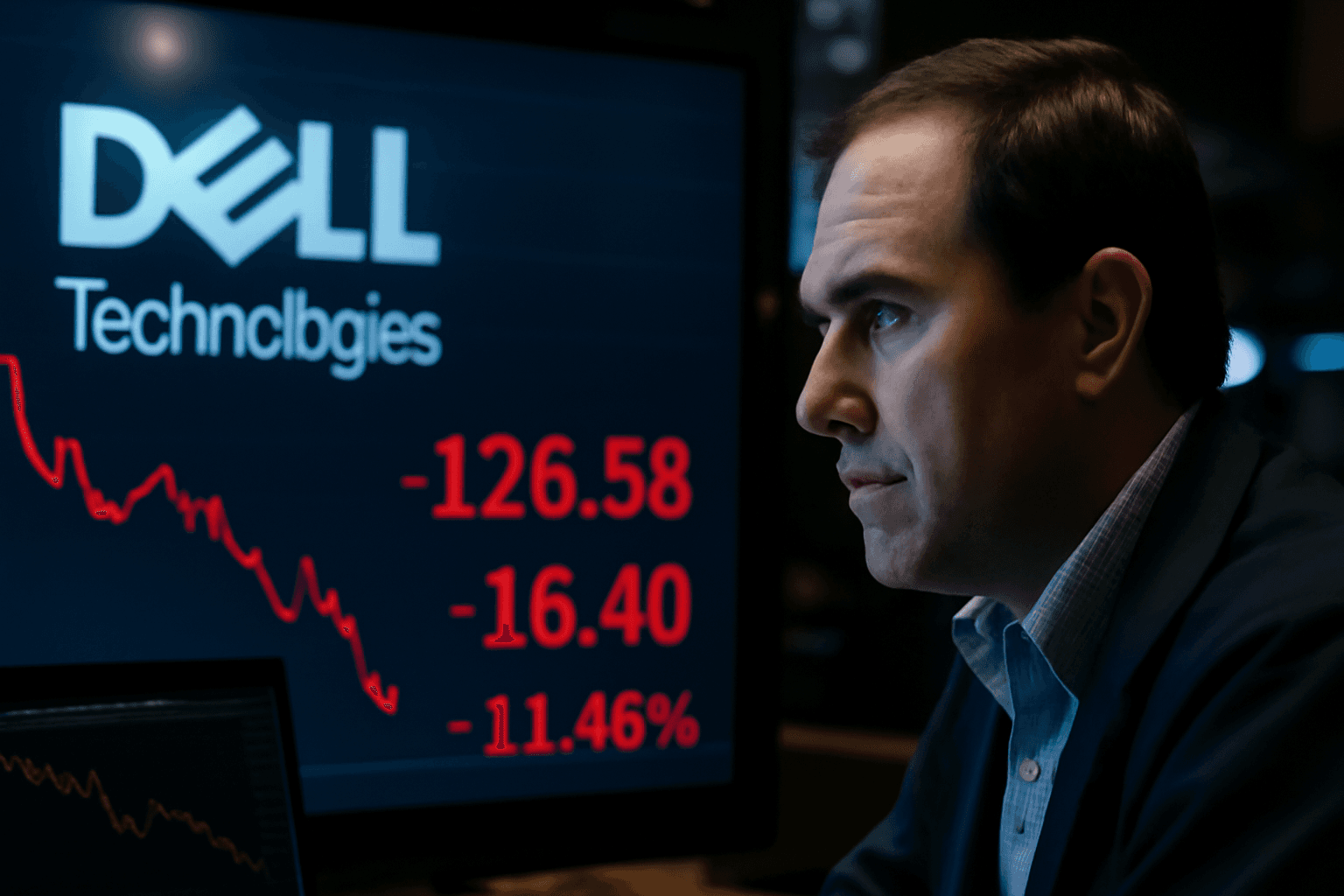
On July 14, 2026, IBM faced an unprecedented stock crash, losing about $67 billion in market capitalization in a single trading session. This 25% drop saw shares plummeting to around $217, marking the company's worst performance in its 115-year history. To contextualize, this decline surpasses the notable drop during Black Monday in 1987, when shares fell by 23.7%.
The catalyst for this significant decline was a dismal pre-earnings warning. IBM revealed a forecasted second-quarter revenue of roughly $17.2 billion, notably below the anticipated $17.85 billion laid out by Wall Street analysts. CEO Arvind Krishna acknowledged that the results were “worse than our expectations,” attributing the underperformance to escalating chip costs and the company's struggle to adapt to changing enterprise spending priorities.
This situation is particularly concerning given the rising trend of businesses allocating funds towards AI infrastructure, where IBM appears to be missing out. Economist Steve Hanke has pointed to a “dual bubble” forming in AI markets, drawing parallels to the dot-com era. Hanke's commentary suggests that IBM's struggles reflect a broader macroeconomic trend, rather than merely isolated missteps within the company.
For investors in crypto and digital assets, the implications are significant. IBM has been a notable player in blockchain technology, contributing to initiatives like Hyperledger and various enterprise distributed ledger projects, which exemplify institutional blockchain adoption. A financially weakened IBM may reduce its investments in these areas, potentially slowing enterprise blockchain development at a critical moment when applications in supply chain and financial services were gaining traction.
A looming risk for the market is that disillusionment with AI could trigger a widespread “risk-off” sentiment, negatively impacting all sectors, including cryptocurrency. Investors might recall the March 2020 crash, where Bitcoin fell in line with equities before eventually decoupling. Such patterns could signal the need for caution among crypto investors.
This material is for informational purposes only and does not constitute financial advice.