General Fusion, a nuclear fusion startup supported by Jeff Bezos, has announced its intent to merge with Spring Valley Acquisition Corp. III, elevating its valuation to around $1 billion. This is a significant milestone, as it paves the way for General Fusion to become the first pure-play fusion energy company on public markets. The merger is expected to raise up to $335 million, with a broader goal of facilitating investment in sustainable energy technologies.
The details of the SPAC merger, revealed on May 22, 2026, aim for a target closing date in June 2026. This dual listing strategy on the Nasdaq and Toronto Stock Exchange highlights the company's Canadian origins while seeking to attract US market capital. The structure of the deal includes anticipated funding of $105 million from a public equity investment, known as a PIPE, in addition to a potential $230 million held in the SPAC's trust account, though this is contingent on shareholders redeeming their stakes.
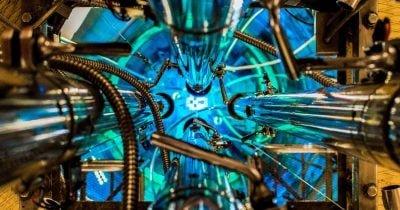
At its core, General Fusion is developing magnetized target fusion technology, distinguishing itself from competitors that utilize lasers or magnetic confinement. Instead, it employs mechanical compression methods to create the conditions necessary for fusion, which marks a unique approach within the realm of nuclear energy.
However, the company’s journey has not been without challenges. Layoffs in 2025 tested investor confidence and posed questions regarding its viability as a scalable technology. The choice to pursue a SPAC route rather than a traditional IPO reflects the current dynamics of funding for pre-commercial enterprises; traditional listings often demand proven profitability, something that nascent fusion ventures cannot yet provide. This highlights an evolving landscape where SPACs offer alternative avenues for innovative but uncertain technologies.
As General Fusion sets its sights on growth within capital markets, the implications extend beyond its immediate prospects. Successful public listing may boost investor interest in fusion and other clean energy ventures, potentially fostering an ecosystem favorable for more radical innovations in energy. The timing is critical, as global momentum towards sustainability escalates, and investors increasingly seek to position themselves at the forefront of the energy transition.
This material is for informational purposes only and not financial advice.