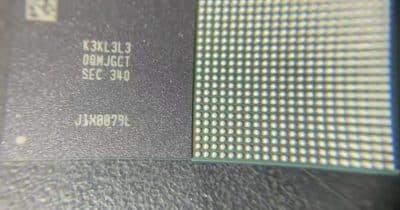
ChangXin Memory Technologies (CXMT), a state-supported chipmaker in China, is currently testing a pilot production line for bonded DRAM at its facility in Hefei. This significant advancement leverages a wafer-to-wafer hybrid bonding technique, which allows for the creation of high-density memory chips free from the constraints of extreme ultraviolet (EUV) lithography, a process that remains exclusively in the purview of the Dutch company ASML and is subject to heavy export controls.
Understanding the Importance of Bonded DRAM
Traditional DRAM chip manufacturing integrates memory cell arrays and their peripheral circuitry into a single silicon piece. This approach is becoming increasingly challenging as chip sizes decrease, necessitating the use of EUV lithography for precision printing. The bonded DRAM method diverges from this path by separating the memory components onto different wafers before merging them, thus enabling high-performance chip production with older lithography tools. This innovation not only sidesteps existing technological bottlenecks but potentially positions CXMT as a direct competitor to industry titans like Samsung and SK Hynix, which are simultaneously exploring similar architectures.
Market Implications and Competitive Dynamics
The timing of CXMT's pilot production has raised eyebrows in South Korean media, especially as both Samsung's B1b project and SK Hynix's endeavors are aligned with similar technological strategies. If CXMT succeeds in commercializing bonded DRAM ahead of its rivals, it could significantly alter the competitive fabric of the DRAM market, which is currently dominated by Samsung, SK Hynix, and Micron. Such a shift would not only impact pricing strategies within the DRAM ecosystem but could also challenge the supply chains of established players.
Rapid Growth and Future Prospects
Established in 2016, CXMT has rapidly evolved from manufacturing 19 nm DDR4 and LPDDR4 chips to advancing towards DDR5 technologies. The company's focus on expanding production capacity and revenue growth has coincided with a rising global demand for DRAM products. Furthermore, CXMT is anticipating its entry into the High Bandwidth Memory (HBM3) segment by the end of 2026, catering to emerging markets like AI accelerators, where it faces existing competition from SK Hynix and Samsung.
As CXMT prepares for its initial public offering on Shanghai’s STAR Market, the industry eagerly awaits detailed insights into its financial health, production capacity, and market strategies. This IPO will serve as a critical inflection point for CXMT, potentially unveiling a new chapter in the semiconductor space.