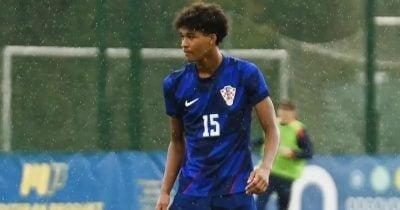
Recent developments in European football have seen Borussia Dortmund secure a promising talent, Liam Claude Kanté, a 16-year-old centre-back from NK Lokomotiva Zagreb. This move exemplifies a significant shift in youth football transactions, where clubs are actively investing in young prospects to bolster their future outlook.
Why This Transfer Matters
The acquisition of Kanté is notable not just for its implications for Dortmund but for the wider Bundesliga. Historically, Bayern Munich has dominated the domestic transfer market, routinely attracting top talents from rival clubs. Nevertheless, the fact that they, along with Red Bull Salzburg, fell short in the pursuit of Kanté can be seen as a shifting landscape where Dortmund is increasingly recognized as a formidable player in talent development.
- Kanté is just 16 years old, indicating his youth and potential for growth.
- Dortmund's decision comes amidst interest from Bayern Munich and other clubs, underscoring the competition for this talent.
- The transfer fee remains undisclosed, a common practice for youth transfers, usually involving low six-figure sums.
The Strategy Behind Youth Transfers
Dortmund's investment in Kanté fits into a broader strategy of identifying and cultivating young talent. The previous sale of Jude Bellingham to Real Madrid for over 100 million euros illustrates this strategy's financial viability. When clubs like Dortmund focus on building a robust youth setup, they not only prepare potential first-team players but can also significantly boost their financial standing through strategic sales. This is akin to the venture capital model, where investments are made with an eye on future returns.
Additionally, Dortmund being publicly listed on the Frankfurt Stock Exchange adds a layer of scrutiny to its financial decisions, making the pressure to succeed both on-field and off-field even more pronounced. This scrutiny often amplifies their need to balance short-term performance with long-term gains, which investing in youth talents like Kanté exemplifies.
Looking Ahead
As Kanté integrates into BVB's U19 ranks, fans and analysts alike will be keen to monitor his development over the coming years. With centre-backs often taking longer to mature, it could be two to three years before he even approaches first-team consideration. The dynamics surrounding his transfer raise questions about how Bundesliga rivalries will evolve, particularly in light of Bayern's recent struggles in securing local talent.
While Dortmund’s youthful investments are promising, the effectiveness of this strategy hinges on how well they can nurture and eventually transition these players into successful professionals. For now, the Kanté acquisition is a statement of intent from BVB, as they work to establish themselves firmly as a major force in not just the Bundesliga but European football overall.
This material is for informational purposes only and does not constitute financial advice.