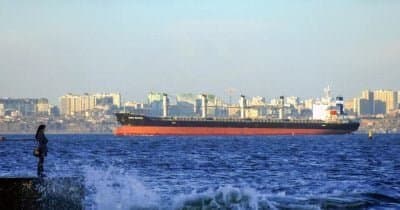
Grain ships that were still moving through the Black Sea as recently as last year are now sitting idle. Ukraine has suspended port operations along its Black Sea coast after a fresh wave of Russian strikes forced a halt to exports and left civilian infrastructure in ruins. The shutdown is the most concrete sign yet that Russia's withdrawal from the Black Sea Grain Initiative in July 2023 has translated into a genuine stranglehold on one of the world's most watched shipping lanes.
What the port closures actually mean
Ukraine's Black Sea terminals handled tens of millions of tonnes of grain annually before the war. Even after February 2022, the Grain Initiative brokered by the UN and Turkey kept a corridor open, allowing roughly 33 million tonnes to leave Ukrainian ports over about a year. That deal collapsed when Moscow pulled out, and the strikes reported in July 2026 have now pushed the situation past the point where commercial traffic can continue at all. Civilian casualties accompanied the latest bombardment, adding pressure on Kyiv to suspend operations rather than risk further losses.
The economic hit is immediate. Grain exports are a primary hard-currency earner for Ukraine, and any prolonged closure squeezes the budget at a moment when military spending is already stretched. Longer term, the ports are not just commercial infrastructure: they are a logistical artery for resupply and troop movement along the southern front.
Crimea and the southern front
Control of the Black Sea has always been the subtext of the fight over Crimea. Russia seized the peninsula in 2014 partly because it hosts Sevastopol, home to the Black Sea Fleet. Ukraine has since managed to push Russian naval assets back significantly, destroying or disabling a meaningful portion of the fleet with drone and missile strikes. But Russian forces still hold enough maritime reach to threaten Ukrainian ports from stand-off distances, as the latest strikes demonstrate.
Analysts watching prediction markets note that pricing on Ukrainian recapture of Crimea has softened following the port closures, reflecting the view that degraded logistics complicate any large-scale southern offensive. Separately, odds on a ceasefire agreement have also drifted lower, consistent with an escalation phase rather than a negotiation phase.
What comes next
The international response will matter. After the Grain Initiative collapsed in 2023, Western governments explored alternative land and river routes through Romania and Poland, but those corridors carry a fraction of the volume that the sea route handled. A sustained closure lasting months would begin to affect global wheat and corn prices, particularly for import-dependent countries in North Africa and the Middle East that relied on Ukrainian supply.
Diplomatic options are narrow. Russia has shown little interest in returning to a framework it abandoned, and renewed negotiations would likely require concessions that neither side currently appears willing to offer. Ukrainian countermeasures, including continued strikes on Russian naval assets and coastal positions, remain the most active variable in the short term. The situation in Sloviansk, where elevated market pricing suggests increased Russian military pressure, adds another data point to a picture that looks more like escalation than plateau.
This article is for informational purposes only and does not constitute financial or investment advice.