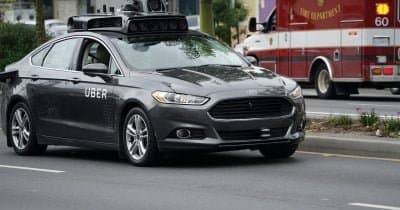
On August 1, 2026, Uber revealed its vast autonomous vehicle coalition, teaming up with about 30 companies in a bet exceeding $10 billion. Instead of building cars or software alone, Uber aims to create a platform that connects and supports multiple AV players.
The centerpiece is a plan to launch at least 20,000 robotaxis by 2026 using Lucid's Gravity platform, equipped with Nuro's autonomy technology. Uber invested roughly $300 million into Lucid to make this ride a reality. Beyond vehicles, the company allocated $100 million to fast-charging networks in ten autonomous-focused cities, preparing the infrastructure necessary for large-scale deployment.
Uber's autonomous unit, dubbed Uber Autonomous Solutions since February 2026, offers data, mapping, and operational support to partners including Waymo, Zoox, Motional, Rivian, and NVIDIA. Rivian targets 50,000 R2 vehicles by 2028, while collaborations with NVIDIA aim for a 100,000-strong fleet by 2027.
Currently, Uber operates robotaxi and delivery services in over ten US markets and plans further expansion as regulations evolve. Despite this massive expansion, Uber's AV initiatives lack integration with crypto or blockchain tech, although the company explored blockchain for AV data sharing several years ago without concrete results.