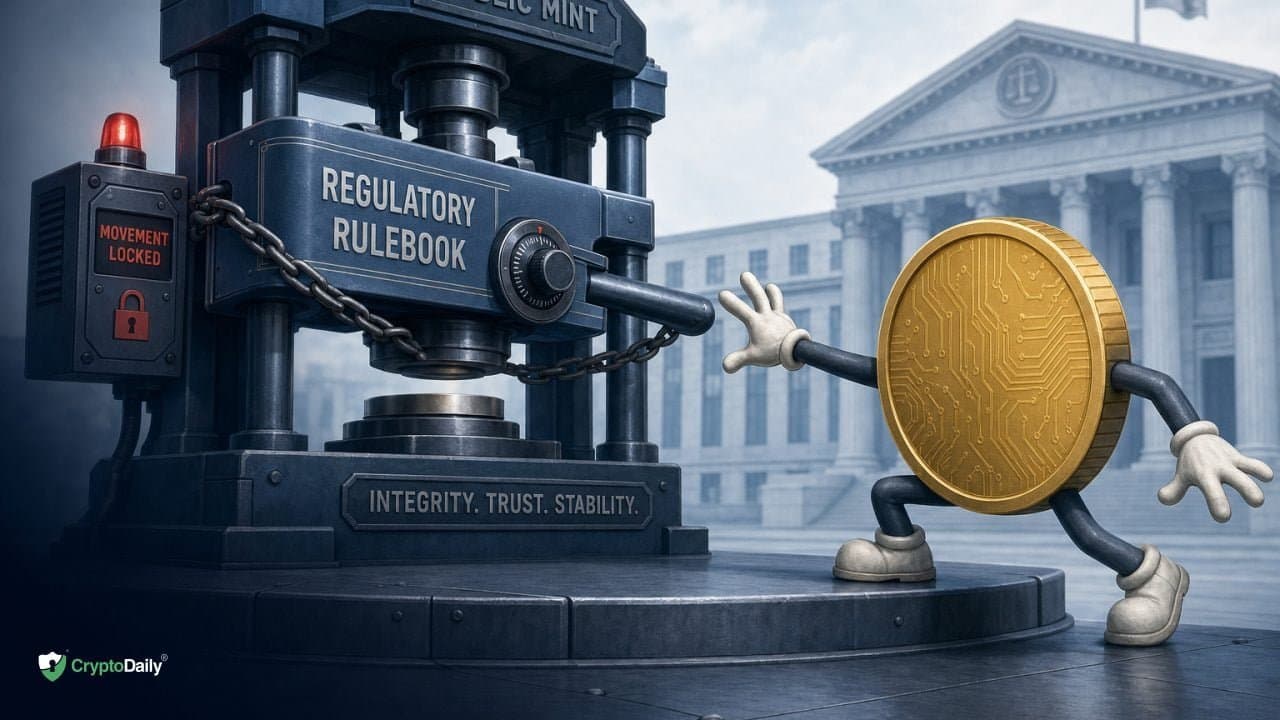
On July 21, 2026, President Donald Trump signed ethics language that prohibits federal officials from issuing cryptocurrencies, with the Department of Justice named as the primary enforcer.
The ban covers a wide range of officeholders: the president, vice president, and members of Congress all fall under the new restriction.
The rule surfaced publicly after it was discussed on an industry call with White House crypto adviser Patrick Witt, and multiple outlets including The Block and CryptoBriefing confirmed the details.
DOJ's role as sole enforcer has already drawn pushback on Capitol Hill, signaling that the provision will face friction before it settles into final form.
The ethics language is tied to ongoing CLARITY Act negotiations, which means its exact wording is still in flux. Until the final text is public, legal teams are advising clients to assume the most conservative possible reading.
In practice, this means any token launch plan that puts a federal official anywhere near the mechanics of issuance needs to be scrubbed. Policy education and government relations work can continue, but a strict firewall between that engagement and token issuance is now the baseline.
The policy shift is already moving markets in subtle ways. OTC desks have been widening quotes whenever DC floats new enforcement signals, and at least two token projects quietly pushed back mainnet dates earlier this year to avoid overlapping with congressional briefings.
Comms teams working on government-facing events have also started pulling NFT-related swag, a small but telling sign of how quickly the optics calculus has changed.
The DOJ enforcement angle came up repeatedly on policy calls in June, well before the formal announcement, and legal teams at several firms had already begun drafting stricter public-sector engagement policies in anticipation.
Conflicts of interest around token issuance by officials have been a slow-burning concern since early 2026. This rule makes the boundary explicit, which at minimum removes ambiguity for project teams trying to navigate Washington relationships without triggering regulatory exposure.
This article is for informational purposes only and does not constitute financial or legal advice.


