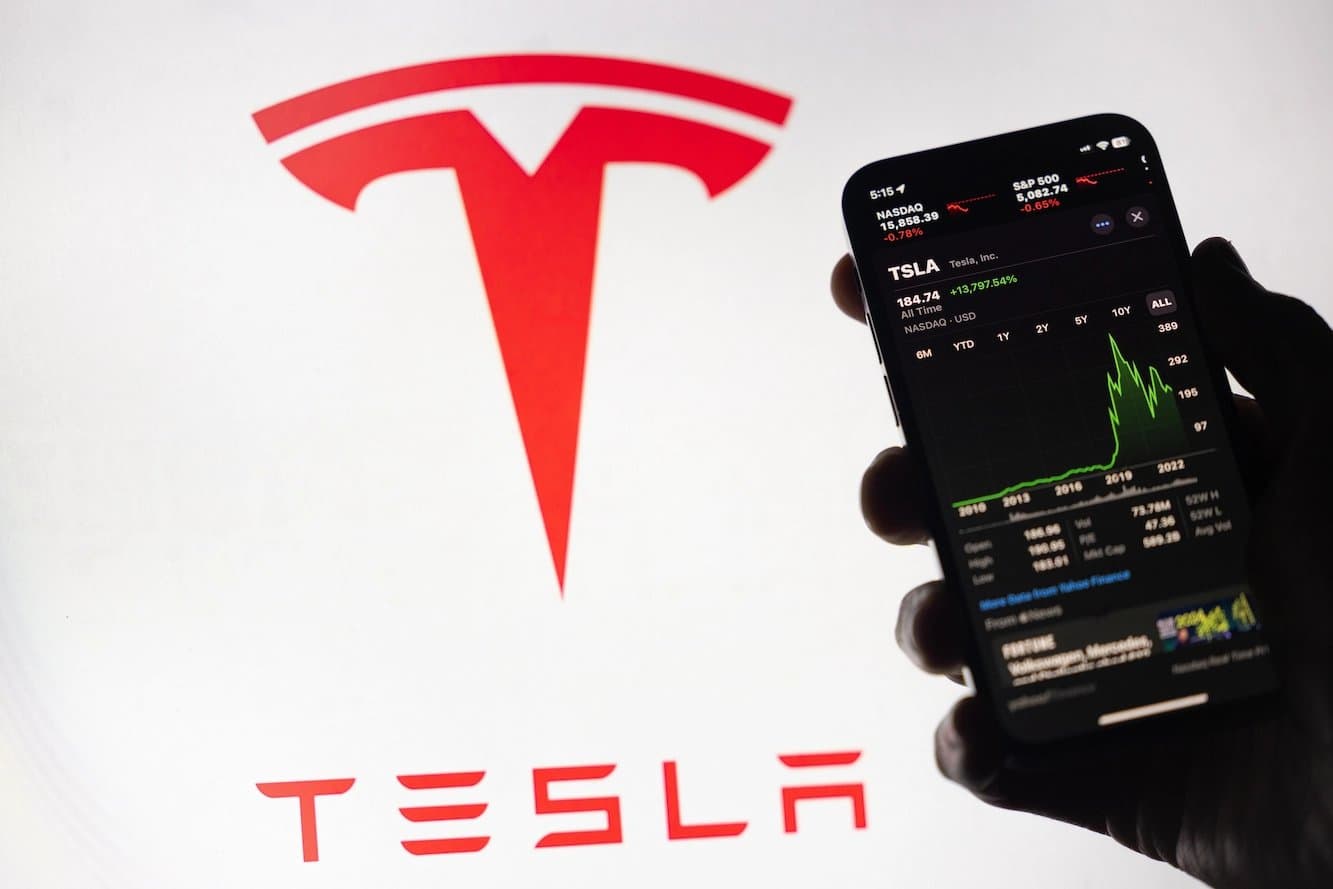
Tesla's stock (NASDAQ: TSLA) took a hit after falling below a key technical support point, signaling a potential slide toward $200, according to market analyst Ali Martinez. The shares are currently hovering around $313, marking a roughly 30% decline since the start of the year.
Martinez highlighted in a recent X post that Tesla broke through the mid-range support near $360, a level that had served as a reliable floor within its trading range. With this level breached, traders are now eyeing $280 as the next critical target. If selling pressure continues, the bottom of that channel near $200 could become the next point of interest.
"Tesla lost a key support level," Martinez wrote. "The breakdown below the mid-range support shifts my focus to $280. If sellers remain in control, a move to the channel bottom near $200 could be next for $TSLA."
This breakdown also points to a weakening long-term trading structure. Resistance sits near $485, while the recent support at $360 has turned into resistance. Closing at $313 puts Tesla well below that prior support.
If the stock falls to $200, it would mean a roughly 36% drop from current levels and about a 60% plunge from its 52-week high near $498.83.
The technical weakness appeared after Tesla’s Q2 2026 earnings disappointed investors. Revenue grew 26% year-over-year to $28.24 billion, and vehicle deliveries hit a record 480,126 units, but profitability showed signs of strain. Adjusted earnings per share missed estimates, landing at $0.33 against expectations near $0.53. Operating margin dropped sharply to 1.4% from 4.1% a year earlier, and free cash flow turned negative to about $1.09 billion.
Capital expenditures surged by 142% to $5.79 billion as Tesla ramped up spending on AI, robotaxis, Optimus humanoid robots, battery production, and manufacturing expansion.
The market reacted swiftly, sending Tesla shares down 12% to 15% post-earnings and erasing over $140 billion in market value.
Still, Tesla shows strength in growth areas. Full Self-Driving subscriptions jumped 56% year-over-year to 1.48 million, and the company expanded robotaxi operations in several U.S. cities. Preparations for Cybercab production at Giga Texas and ongoing Optimus development also continue, projects that many investors see as vital for the company’s future.
This content is for informational purposes and does not constitute financial advice.