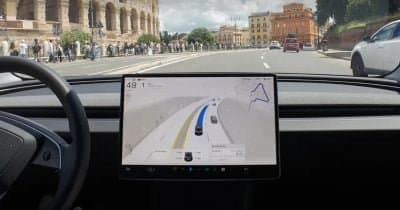
"If this data were true, FSD would be the most important safety technology since the seatbelt," one analyst told Reuters this month, and then added: "The problem is we can't verify any of it." That tension sits at the center of Tesla's latest safety report, which the company quietly published alongside a bold claim: vehicles running Full Self-Driving experience seven times fewer major collisions than manually driven Teslas.
The numbers come from more than 4.86 billion city miles of onboard telemetry, which is an enormous dataset by any measure. Tesla also says FSD-equipped cars see five to seven times fewer minor and off-highway incidents compared to both its own manually driven fleet and broader US national averages. The headline projection is even more striking: widespread FSD adoption could prevent over 32,000 deaths and 1.9 million injuries every year in the United States. Those figures would, if accurate, dwarf the impact of almost any other automotive safety initiative in recent history.
Reuters pushed back hard on the methodology, characterizing Tesla's comparisons as "weak and misleading." The core objection: internal telemetry from a self-selected group of Tesla owners may not translate cleanly to national crash statistics compiled under entirely different conditions and definitions. Democratic Senators Edward Markey and Richard Blumenthal went further, formally requesting on June 16, 2026 that the National Highway Traffic Safety Administration open a review of Tesla's safety claims. NHTSA had already opened separate probes into FSD-related incidents during 2025, and scrutiny has only intensified since. May 2026 also produced a record 207 Advanced Driver Assistance Systems crash reports across all manufacturers, the highest single-month total ever logged, which made it harder for Tesla to frame the broader ADAS story as a clean win.
The NHTSA review is now the sharpest near-term risk for Tesla's autonomy ambitions. A finding that the safety claims are materially misleading could trigger anything from mandatory disclaimers to outright restrictions on FSD deployment in certain states. Worth noting: more autonomous miles naturally generates more reportable incidents even when per-mile rates are improving, but regulators and legislators tend to react to raw numbers on a page, not rate adjustments buried in footnotes. The same dynamic has played out before in other tech-meets-regulation collisions, and it rarely moves quickly in the automaker's favor.