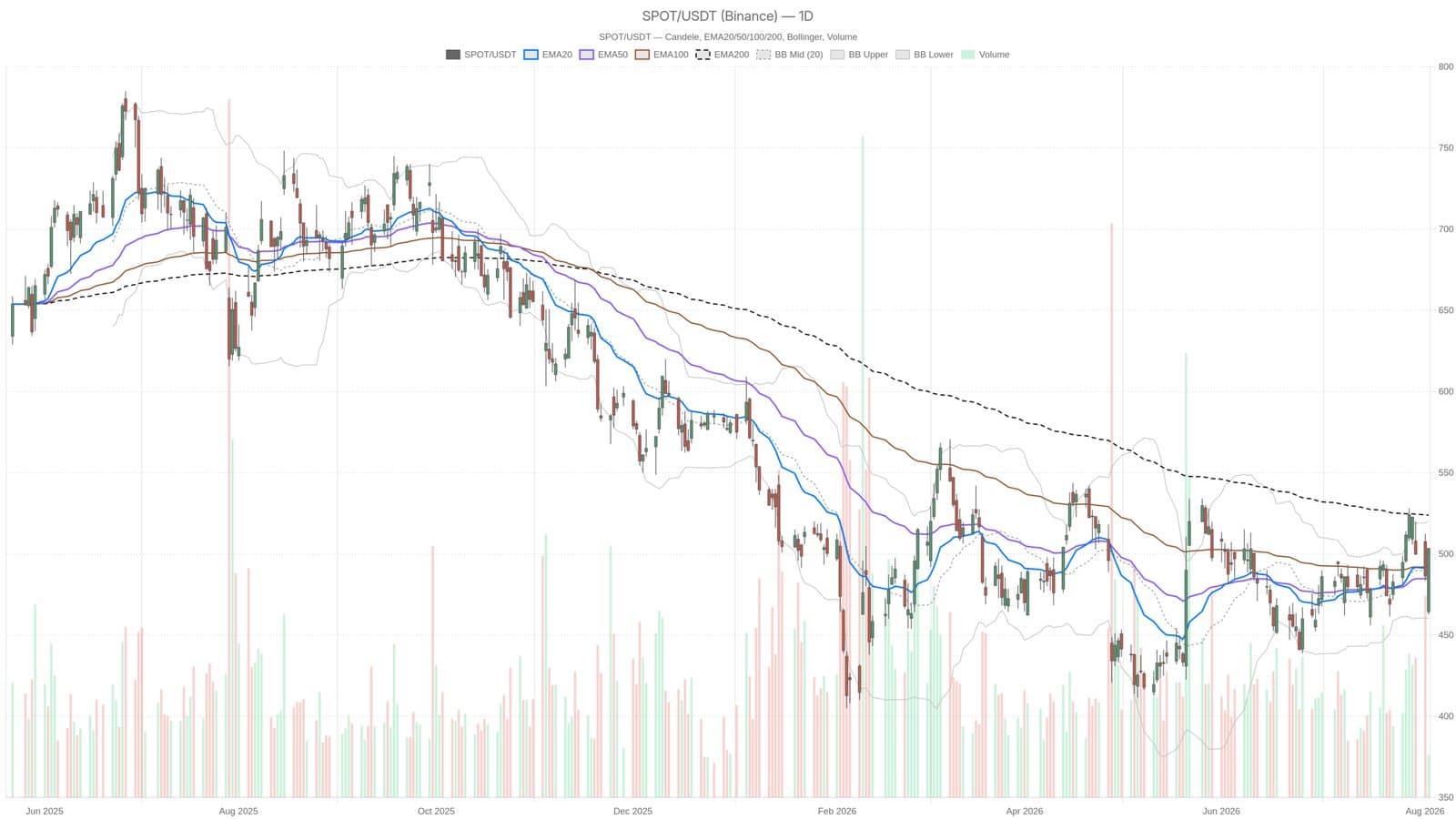
Spotify stock ripped from 462 to 503 on August 4 after an earnings gut-punch. The streaming giant reported 777 million users, up 12% year-over-year, but forward guidance on active subscriber growth and operating income both landed below what analysts were bracing for. Price action screamed recovery. The fundamentals whispered caution.
That split between what the chart showed and what the numbers said defines the whole setup right now. A 41-point intraday swing is violent. Closing above both the 20 and 50-day moving averages at 492 and 485 signals short-term momentum flipped positive. Bullish on the surface. But 503 still sits 20 points below the 200-day average at 523, meaning the longer structure hasn't budged. The daily MACD turned positive with the histogram at 1.2, backing the reversal, yet hourly momentum already rolled negative. That divergence matters more than it looks.
The numbers that spooked the tape
User growth at 12% year-over-year isn't shabby, and 777 million monthly actives represents the streaming industry's scale shift. But Q3 guidance missed on both headcount and margin expansion. Spotify faces rising costs tied to AI features and licensing pressure that the earnings beat couldn't offset. The market got the growth story and immediately asked what happens next. When forward guidance disappoints, a single quarter of user additions doesn't carry you through the next downturn.
What technicals actually say
The daily chart is constructing a classic bounce-but-capped pattern. Price has reclaimed the short-term moving averages and momentum indicators turned constructive, which is why we got the 8% intraday reversal. Traders who sold at 462 saw the recovery and covered. But 524 sits as genuine overhead resistance, tied to where the 200-day rides. Until that level cracks, the rally stays contained. Daily ATR at 20.78 is elevated, confirming this move had violence but not direction. Volatility is the dominant feature, not a new uptrend.
The tension is real. Technical buyers see a reversal setup and lower entry points that work if the stock holds 485 going forward. Fundamental traders see a company guiding lower margins and slower growth. One side wins when price breaks above 524 and clears the 200-day. The other when it folds back below the recent low. Until then, Spotify sits in that awkward space where both stories have evidence.